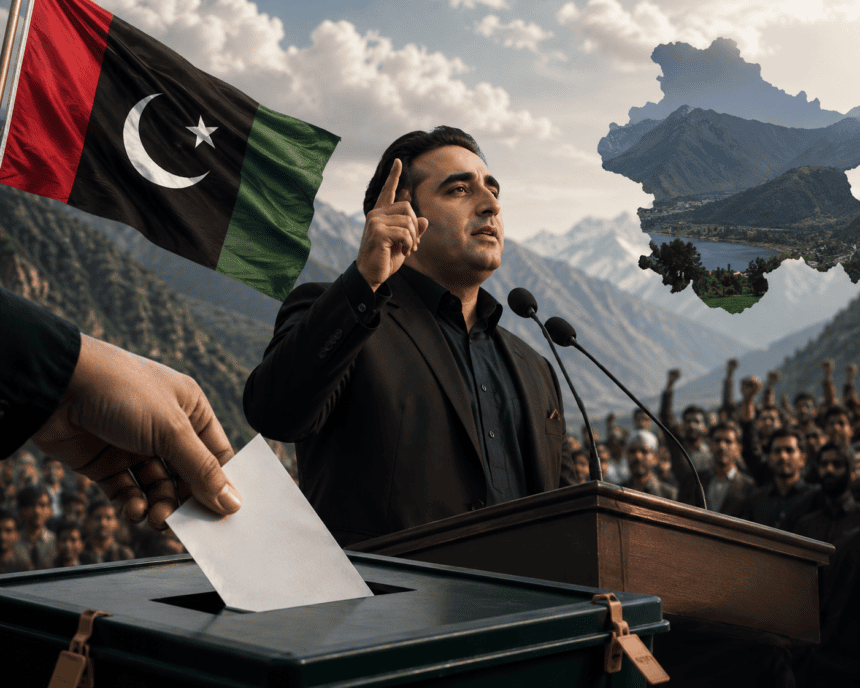
Bilawal Bhutto-Zardari has set a high bar for the Pakistan Peoples Party (PPP) in the upcoming Azad Jammu and Kashmir (AJK) elections, signaling that the party is no longer content with being a secondary player in the region.
During a recent strategy session, the PPP chairman made his expectations clear: the party must secure enough seats to form a government, not just improve its vote share. He warned the local leadership that “better results” are the only metric for success this time around.
The PPP has historically struggled to maintain a consistent foothold in AJK’s legislative assembly, often finding itself sidelined by the major power brokers in Muzaffarabad. By pushing for a government-forming mandate, Bhutto-Zardari is attempting to shift the party’s narrative from a regional opposition group to a viable ruling force.
Internal party sources indicate that the leadership is focusing on “electables”—politicians with strong local influence—to bolster their chances. This strategy is a direct response to the party’s past reliance on traditional loyalists who, while dedicated, often lacked the organizational reach to secure victory in competitive constituencies.
But the path to the Prime Minister’s office in AJK is crowded. Both the PML-N and PTI are already digging in, with local alliances shifting daily. The PPP’s challenge isn’t just about voter turnout; it’s about convincing a skeptical electorate that their governance model in Sindh can be effectively replicated in the mountainous, politically complex terrain of Kashmir.
Bhutto-Zardari’s rhetoric suggests he is aware of the skepticism. He has tasked his lieutenants with finalizing candidate lists early, hoping to avoid the internal rifts that cost the party seats in previous cycles.
Whether this push for a government-forming majority is a realistic ambition or a morale-boosting tactic remains to be seen. For now, the directive to the party faithful is simple: win, or explain why you didn’t.