KATHMANDU — A three-year-old girl was found dead Tuesday in a remote village in Nepal’s Baitadi district, triggering a wave of protests across the country. The toddler, who had been missing for two days, was discovered in a nearby forest, bearing clear signs of sexual assault and strangulation.
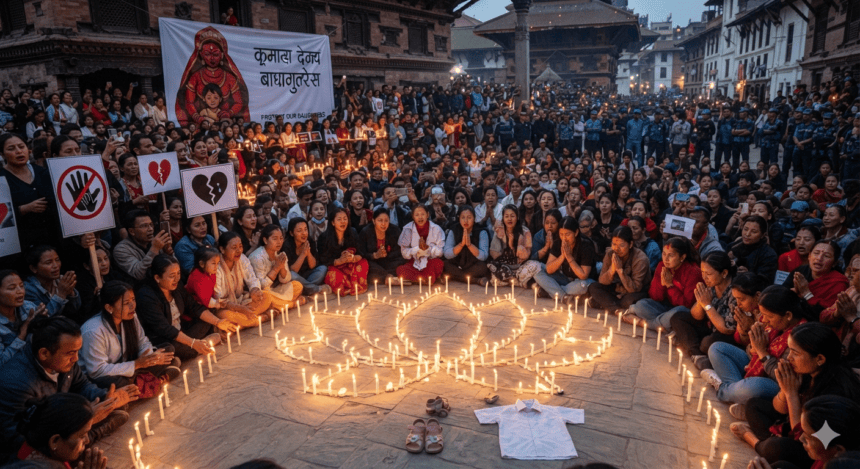
Police arrested a 16-year-old suspect in connection with the crime late Wednesday. The arrest, however, has failed to dampen the anger on the streets. Demonstrators in Kathmandu and surrounding districts are calling for the death penalty for perpetrators of gender-based violence—a punishment that remains off the books in the Himalayan nation.
The brutality of the case has reignited a long-standing debate over the government’s failure to protect women and children. Activists say the justice system is broken, citing the high volume of cold cases and the systemic intimidation faced by victims’ families.
“We aren’t just mourning a child; we are mourning a system that lets this happen over and over,” said Sunita Maharjan, a human rights activist who joined the protest outside the prime minister’s office on Thursday.
Data from the Nepal Police reveals a grim reality. Over the past year, reported incidents of rape and attempted rape have climbed, yet conviction rates remain stagnant. Families often face immense social pressure to settle cases out of court, a practice that leaves attackers free to strike again.
The Home Ministry issued a brief statement promising a “speedy and transparent” investigation. They pledged to move the case to a fast-track court to ensure the suspect faces the full extent of the law.
But for the protesters gathered in the rain-slicked streets of the capital, these promises feel like a rehearsed script. They aren’t looking for another investigation. They are looking for a shift in a culture that has, for too long, treated the safety of the most vulnerable as an afterthought.
As the village in Baitadi prepares for a funeral, the national conversation has shifted from grief to an ultimatum: systemic reform, or the protests will not stop.