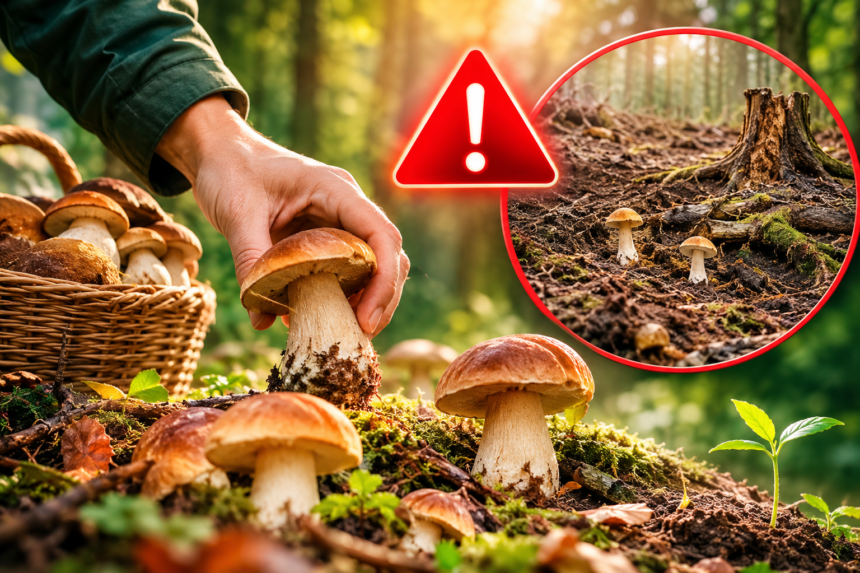
Foraging for wild mushrooms has shifted from a quiet weekend hobby into a commercial-scale threat to Britain’s forests. The Woodland Trust says the surge in popularity—fueled largely by social media trends—is leaving local ecosystems on the brink as people strip woodlands bare for profit.
It isn’t just about a few missing chanterelles. Fungi are the forest’s plumbing and communication system. They move nutrients between trees and provide essential winter food for deer, squirrels, and rare insects. When foragers clear a site, that cycle breaks.
“We’re seeing people turn up with huge crates, not just a small basket for dinner,” says one conservation officer. These “industrial-scale” pickers often target high-value species to sell to restaurants, bypassing the legal protections meant to keep the woods healthy. The charity warns that if the soil is trampled and the “fruit” of the fungi is removed before it can drop spores, the colony simply dies out.
The trend has hit a breaking point in places like the New Forest and Epping Forest, where picking is either strictly controlled or banned. Rangers there report a rise in organized groups clearing entire patches before dawn. It’s a theft of biodiversity that most visitors don’t realize is happening.
Social media bears much of the blame. Viral videos often show “secret spots” and massive hauls without mentioning the ecological cost or the legal risks. For many, it’s a gold rush in the undergrowth. But for the forest, it’s a slow-motion disaster.
The Woodland Trust is now urging the public to stick to the “one-third” rule: never take more than you need, and never take everything you see. Better yet, they say, take a photo and leave the fungi where they belong.
If the current pace of over-harvesting continues, some of the UK’s rarest species won’t just be harder to find—they’ll be gone for good. The woods can’t outrun the demand.