Lead: Seabird populations are plummeting across the Pacific coast, and biologists point to a familiar culprit: El Niño. As ocean temperatures spike, the food chain is collapsing from the bottom up, leaving thousands of birds starving on beaches from Peru to California.
The pattern is stark. Warm, nutrient-poor water has pushed the cold-water fish that seabirds rely on—like anchovies and sardines—into deeper, cooler zones beyond their reach. When the birds can’t dive deep enough to hunt, they don’t just go hungry; they stop breeding, abandon nests, and eventually die.
“It’s a total reproductive failure in some colonies,” said Dr. Elena Vargas, a marine ecologist monitoring the Humboldt Current. “We aren’t just seeing a few stragglers. We’re seeing entire year-classes of chicks simply vanishing.”
The economic and ecological stakes are high. These birds are the pulse of the ocean’s health. Their absence signals a broader breakdown in the marine ecosystem that supports local fisheries, which millions of people rely on for their primary source of protein.
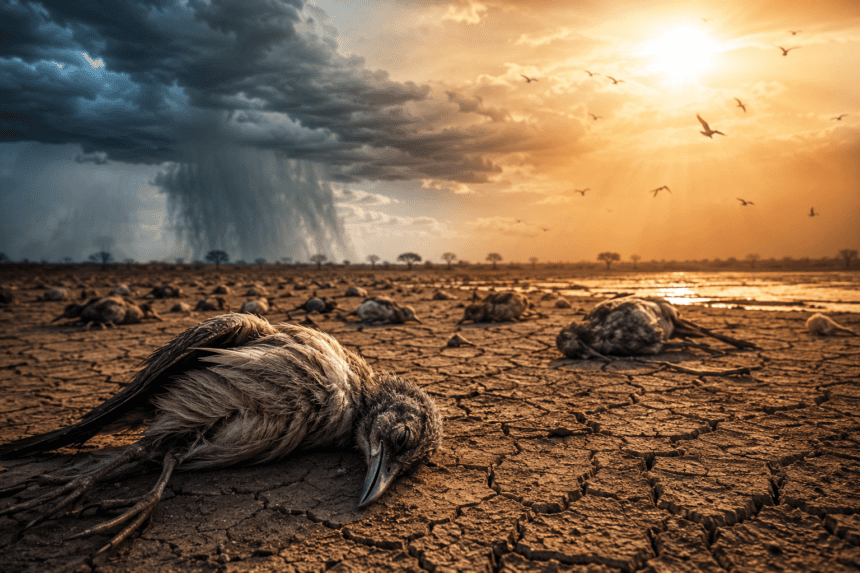
Data from the National Oceanic and Atmospheric Administration (NOAA) confirms that surface temperatures in the equatorial Pacific remain well above historical averages. This shift isn’t just a temporary weather blip; it’s a sustained disruption. In Peru, coastal colonies that usually teem with life are now littered with carcasses, a grim visual of an ocean pushed past its thermal limit.
While El Niño is a natural cycle, the intensity of this current event is layering onto a warming trend that leaves little room for recovery. Seabirds have navigated these cycles for millennia, but the speed of current climate change means they have less time to adapt or find new foraging grounds.
Conservationists are now scrambling to track the extent of the damage, but the window to intervene is closing. If the Pacific doesn’t cool, this season could mark a permanent shift in regional biodiversity.
“We’re watching a crisis unfold in real-time,” said Vargas. “The ocean is telling us exactly what’s wrong—we just have to be willing to look.”