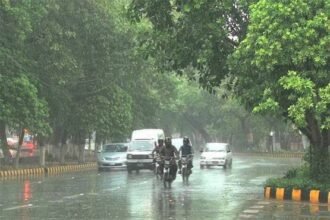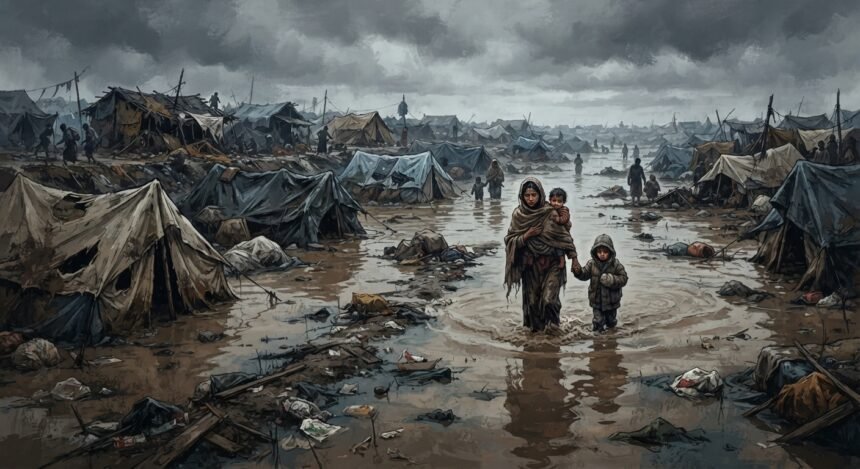
Heavy rains triggered flash floods across Gaza’s tent cities this week, washing away bedding and food supplies for thousands of displaced families. The collapse of already fragile drainage systems turned paths into mud-clogged channels, leaving residents to salvage what remains of their belongings in near-freezing temperatures.
For the families sheltered in Deir al-Balah and Mawasi, the weather is now as lethal as the ongoing conflict. Tents constructed from thin plastic sheeting and plywood provided no defense against the overnight deluge. By dawn, hundreds of families found their living spaces completely submerged, forcing children and the elderly to stand in waist-deep water.
Humanitarian agencies have struggled to reach the hardest-hit zones. Aid trucks remain stalled on main arteries, where flooded roads and debris have made delivery routes impassable. The United Nations Relief and Works Agency (UNRWA) reported that supply chains for blankets and winterization kits are effectively severed until the water recedes.
“We aren’t just fighting hunger anymore,” said Ahmed, a father of four currently sheltering in a makeshift tent near the coast. “We are fighting the ground beneath us. Every time it rains, we lose more of the little we brought with us.”
The destruction of municipal infrastructure has left the territory’s wastewater systems inoperable. Public health officials are now warning of an imminent spike in waterborne diseases. Stagnant floodwater, mixed with sewage, has begun pooling around living quarters, creating a breeding ground for infection in an area already suffering from a total collapse of medical services.
With fuel shortages preventing the operation of water pumps and generators, the flooding is likely to persist even after the rain stops. Forecasts indicate another front moving in by the weekend, offering no respite for those currently sleeping on sodden ground.
As the temperature drops, the lack of dry clothes and heating fuel turns a logistical crisis into a survival emergency. For the tens of thousands now trapped in the mud, the next few days won’t be about recovery — they’ll be about surviving the night.