By using this site, you agree to the Privacy Policy and Terms of Use.
Accept
Media HydeMedia Hyde
  • Home
  • Politics
  • Education
  • Entertainment
  • Sports
  • Blogs
  • Business & Commerce
  • Others
    • Religious
    • Metropolitan
    • Climate and Weather
Font ResizerAa
Media HydeMedia Hyde
Font ResizerAa
  • Home
  • Politics
  • Education
  • Entertainment
  • Sports
  • Blogs
  • Business & Commerce
  • Others
    • Religious
    • Metropolitan
    • Climate and Weather
Follow US
© 2026 Media Hyde Network. All Rights Reserved.
Climate and Weather

Climate Change Heats Up: Half the World Hit by 30+ Days of Extreme Heat

Last updated: May 31, 2025 12:50 pm
Sana Mustafa
Share
SHARE

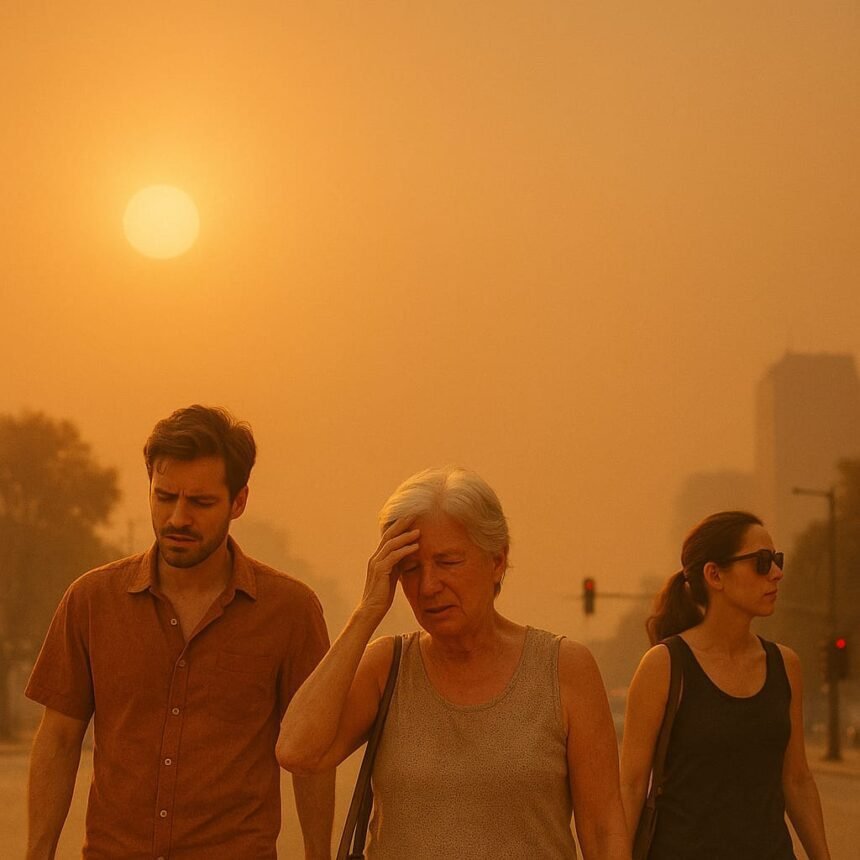
A new global study has revealed that nearly half of the world’s population—around four billion people—endured an extra month of extreme heat over the past year, driven by human-induced climate change. The research, conducted by World Weather Attribution, Climate Central, and the Red Cross, underscores the escalating impact of rising temperatures fueled by continued fossil fuel use.

The analysis, which covered weather data from May 1, 2024, to May 1, 2025, defined extreme heat as temperatures hotter than 90% of those recorded at a given location between 1991 and 2020. During this period, 67 extreme heat events were identified globally.

The report warns that unless fossil fuel use is phased out, global temperatures will continue to climb, bringing more frequent and severe heatwaves. These heatwaves have already led to a surge in heat-related deaths and illnesses, devastated crops, and placed immense strain on energy and healthcare systems.

Despite the lethal toll of extreme heat, it often fails to capture headlines like floods or cyclones. “Heat is arguably the deadliest extreme weather event,” the report noted. Yet heat-related deaths are frequently underreported or misclassified. “Heatwaves are silent killers,” said Friederike Otto, a climate scientist at Imperial College London and co-author of the study. “People often die in hospitals or overheated homes, away from public view.”

The Caribbean region was particularly hard-hit, with the island of Aruba experiencing 187 days of extreme heat—142 days more than what would have occurred without climate change. Other severely affected areas included Central Asia in March, South Sudan in February, and the Mediterranean in July 2024, where temperatures reached a deadly 48°C (118°F) in Morocco, killing at least 21 people.

The burden of extreme heat is disproportionately felt by low-income communities and vulnerable groups, such as older adults and individuals with pre-existing health conditions.

Roop Singh of the Red Cross Red Crescent Climate Centre emphasized the urgent need for stronger heat response systems. “People are feeling the temperatures rise, but many aren’t connecting it to climate change,” Singh said. “We must rapidly expand early warning systems, develop effective heat action plans, and integrate long-term heat management into urban planning.”

In conclusion, the study reinforces a critical message: without swift action to reduce carbon emissions and transition away from fossil fuels, extreme heat will continue to worsen, affecting billions more in the years to come.

Share This Article
Email Copy Link Print
Previous Article Possible New Dwarf Planet Discovered at Solar System’s Edge
Next Article Four More Complex and Costly Treatments Included in Sehat Card Plus ‎
Leave a Comment

Leave a Reply Cancel reply

Your email address will not be published. Required fields are marked *

Sponsored Ads

Stay Connected

FacebookLike
XFollow
InstagramFollow
YoutubeSubscribe
WhatsAppFollow
ThreadsFollow
Sindh Schools to Close for Two-Month Summer Break Starting June 1
Education
May 13, 2026
Pakistan Targets Tech Workforce with 20,000 AI Training Slots
Education
May 13, 2026
Tokyo University Launches Fully Autonomous Lab Where Robots Run the Show The lights are on at the University of Tokyo’s newest chemistry lab, but the lab coats are gone. In a move that signals a shift for experimental science, the university has officially opened a facility where robots handle the entire research cycle—from mixing chemicals to analyzing results—without a single human in the room. This isn’t just a room with a few automated arms. It’s a closed-loop system designed to hunt for new materials for batteries and semiconductors at speeds that make traditional methods look like they’re standing still. The AI designs the experiment, the robots execute it, and the data feeds right back into the AI to decide what happens next. "The goal is to remove the bottleneck of human physical labor," a researcher involved in the project’s pilot phase said. "A human can do maybe ten experiments a day. This system won't stop at ten, and it doesn't need to go home at 5:00 PM." The stakes are high. Japan is currently locked in a global race to find more efficient materials for the next generation of electric vehicle batteries. By cutting humans out of the "pipette-and-wait" cycle, the university expects to compress years of trial-and-error into a few weeks of non-stop robotic iteration. It’s a response to a looming crisis, too. Japan’s shrinking workforce means there are fewer young scientists entering the field every year. Automating the grunt work isn't just about speed; it’s about survival in a country where human talent is becoming a scarce resource. Critics often worry that "robot-run" means "job-lost," but the university’s lead engineers argue the opposite. They say the move frees up researchers to actually think, rather than spending eight hours a day performing repetitive liquid handling. The robots don't get bored, they don't make clerical errors, and they don't suffer from "Friday afternoon" fatigue that can ruin a data set. The lab is currently focused on thin-film materials, but the team plans to scale the technology to other branches of chemistry soon. If it works, the image of the lone scientist hunched over a workbench might soon be a relic of the past. The lab is running right now. It’ll be running tomorrow morning. And it won't need a coffee break to get through the night.
Tokyo University Launches Fully Autonomous Lab Where Robots Run the Show
Education
May 13, 2026
Pakistan Offers New Higher Education Scholarships to Bangladeshi Students
Education
May 13, 2026
Private Schools Defy Punjab Government’s Revised Summer Vacation Schedule
Education
May 13, 2026
HEC Drops Paperwork: Fully Online Degree Attestation Goes Live Nationwide
Education
May 13, 2026

You Might Also Like

Charity fundraises to bring back wildlife in Wales
Climate and Weather

Charity fundraises to bring back wildlife in Wales

By
Ayesha Masood
Climate and Weather

Massive Roll Cloud Stuns Portugal Beaches During Record Heatwave

By
Sana Mustafa
Climate and Weather

“Flood Alert Again: India Opens Sutlej Gates, Pakistan on High Alert”

By
Anoosha Malik
Climate and Weather

Typhoon Fung-wong Batters Taiwan with Record Rainfall and Floods

By
Wajeeha Batool
Media Hyde Media Hyde Dark
Facebook Twitter Youtube Rss Medium

About US

Media Hyde Network: Your instant connection to breaking stories and live updates. Stay informed with our real-time coverage across politics, tech, entertainment, and more. Your reliable source for 24/7 News.

Top Categories
  • Headline
  • Politics
  • Entertainment
  • Education
  • Sports
  • Religious
  • Metropolitan
  • Climate and Weather
Usefull Links
  • Contact Us
  • Disclaimer
  • Privacy Policy
  • Cookies Policy
  • Advertising Policy
  • Terms & Conditions

© 2025 Media Hyde Network. All Rights Reserved.

Welcome Back!

Sign in to your account

Username or Email Address
Password

Lost your password?