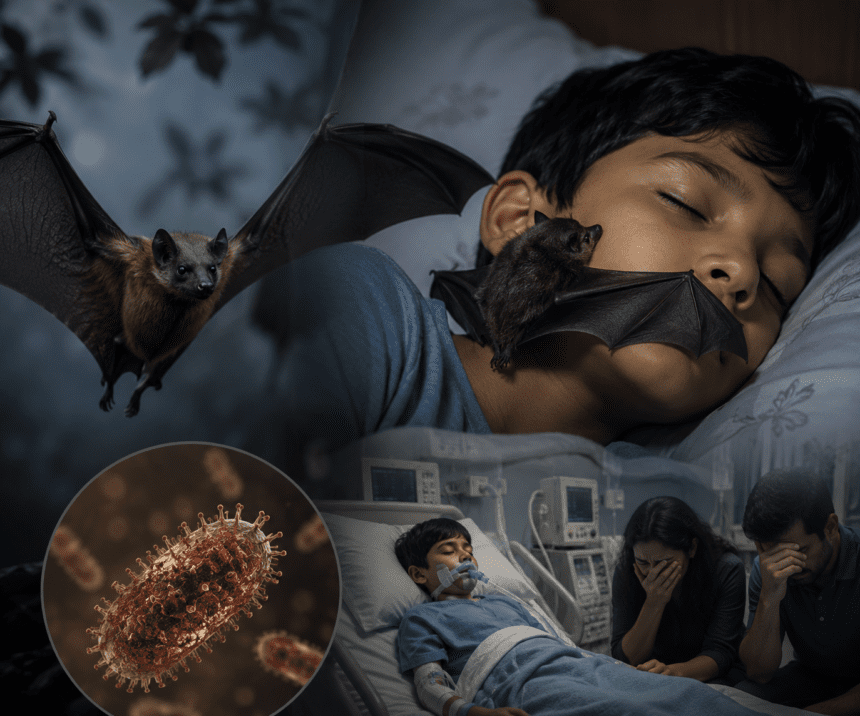
An eleven-year-old boy has died from rabies in a rare, harrowing case where no bite was ever detected. Doctors believe the boy contracted the virus after a bat slept on his mouth, highlighting the dangerous, invisible nature of bat-borne transmission.
The child, whose identity remains protected, fell ill weeks after the encounter. By the time neurological symptoms appeared—the hallmark of rabies—the virus had already taken hold. Medical teams at the hospital confirmed the diagnosis post-mortem, tracing the timeline back to the evening the bat was found resting on the boy’s face.
Rabies is almost always fatal once symptoms manifest. While the public associates the virus with deep, bleeding bites, this case underscores a terrifying reality: the virus can enter the body through microscopic abrasions. A bat’s teeth are often so small that a person may not feel—or see—a puncture wound.
“The lack of a visible bite is what makes this so deceptive,” said a clinical infectious disease specialist familiar with the case. “People assume if they don’t see blood, they’re safe. With bats, that assumption can be a death sentence.”
Public health officials have long warned against handling bats, yet the animal’s presence in residential areas—or even bedrooms—often leads to accidental contact. In this instance, the bat was not perceived as a threat, but as a temporary visitor.
The incubation period for rabies can vary from a few weeks to several months, giving the virus ample time to reach the central nervous system before a victim realizes they are at risk. Once the virus hits the brain, modern medicine offers little beyond palliative care.
The tragedy serves as a grim reminder to local communities: any direct contact with a bat, regardless of whether a bite is visible, requires immediate, aggressive post-exposure prophylaxis. Waiting for symptoms is waiting for a fatality that cannot be reversed.