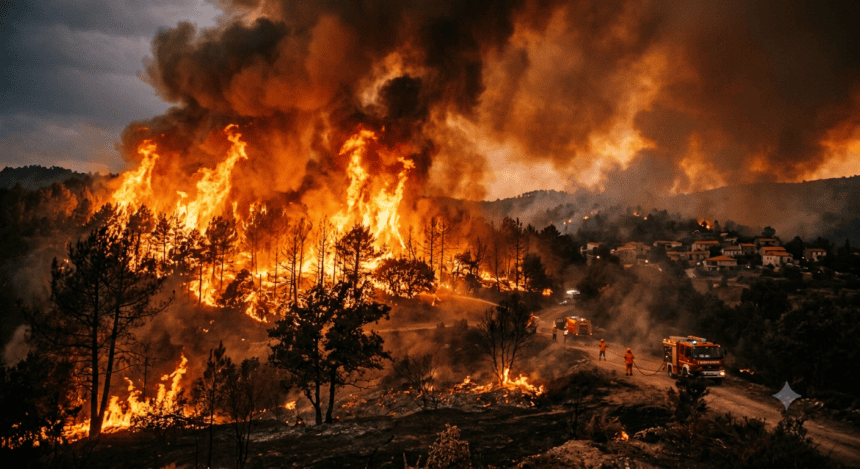
The Mediterranean is burning again. From the parched forests of Greece to the coastal scrubland of Spain, wildfires are tearing through landscapes that have seen little rain and record-breaking temperatures this summer. Firefighters are struggling to contain the blazes, which have already forced thousands of tourists and residents to evacuate their homes.
The intensity of these fires isn’t just about the heat. It’s a dry-fuel crisis. Years of sustained drought have turned massive swaths of Western Europe’s woodlands into tinderboxes. When a spark hits—whether from a discarded cigarette, an electrical line, or a lightning strike—it spreads with terrifying speed.
In Greece, the situation near Athens has reached a breaking point. Authorities have deployed water-dropping aircraft and hundreds of ground crew, but the shifting winds are turning small containment zones into massive fire fronts. “We are fighting a war against the climate,” one local fire chief told reporters on the scene. He didn’t offer a timeline for when the perimeter might hold, noting only that his crews were exhausted and the humidity was near zero.
Spain and Portugal are facing a similar reality. In the Iberian Peninsula, the concern is the sheer scale of the terrain. Emergency services are stretched thin, forced to choose which villages to protect first as the flames move toward populated areas. The EU’s civil protection mechanism has been triggered, with neighboring countries sending specialized firefighting planes to bolster local efforts. It’s a logistical scramble, and the cost—both in economic terms and ecological damage—is mounting by the hour.
Experts warn that this isn’t a one-off event. The “fire weather” season in Europe is starting earlier and ending later, leaving local governments little time to prepare or recover. The standard fire-management protocols, once sufficient, are failing under the pressure of these recurring heatwaves.
For the residents of these regions, the immediate threat is the smoke and the encroaching fire line. For the rest of the continent, the message is becoming impossible to ignore: the infrastructure designed to handle seasonal fire risks is no longer built for the current reality. As the sun sets over the smoldering hills today, the crews will retreat, only to wait for the winds to shift tomorrow morning.