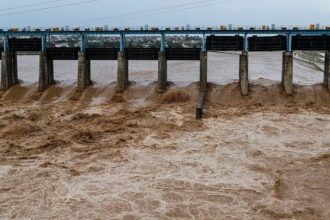


Extreme weather conditions could significantly damage Indian cities unless urgent actions are taken to build climate resilience, warns a new World Bank report.
The report, titled “Towards Resilient and Prosperous Cities in India”, was prepared in collaboration with the Union Ministry of Housing and Urban Affairs. It highlights the urgent need for green, sustainable, and disaster-resilient urban development as India’s city populations soar.
According to the report, India’s urban population is projected to nearly double from 480 million in 2020 to 951 million by 2050, requiring over 144 million new homes by 2070. With such rapid urban expansion, the report warns that heatwaves, rising temperatures in city centers due to the urban heat island effect, and increased flood risks from poor storm water absorption are already threatening lives and infrastructure.
The World Bank studied 24 cities across India, including Chennai, Indore, New Delhi, Lucknow, Surat, and Thiruvananthapuram, to assess the level of preparedness and risks. The findings show that over 50% of the infrastructure India needs by 2050 is yet to be built, creating both a challenge and an opportunity to invest in resilient and low-carbon development.
The report emphasized the importance of investing in green spaces, cool roofing, flood resistant transport systems, early warning systems, and better solid waste management, especially to protect the most vulnerable populations. These actions will not only safeguard lives but also support long-term job creation, economic growth, and sustainability.
World Bank Country Director Auguste Tano Kouame stressed the need to “build resilient cities at scale” by transforming sectors like housing, transport, and municipal services to better withstand climate shocks such as extreme heat and floods.
The estimated investment needed for this urban transformation is over $2.4 trillion by 2050, with a significant role expected from private sector participation. The report showcases cities that are already taking action Ahmedabad has developed a comprehensive Heat Action Plan, Kolkata uses a flood forecasting system, Indore has modernized waste management, and Chennai is implementing a climate action plan focused on both adaptation and low-carbon growth.
The report was supported by the Global Facility for Disaster Reduction and Recovery (GFDRR) and urges national and local governments to urgently adopt policies and investments that build urban resilience before the climate crisis deepens further.