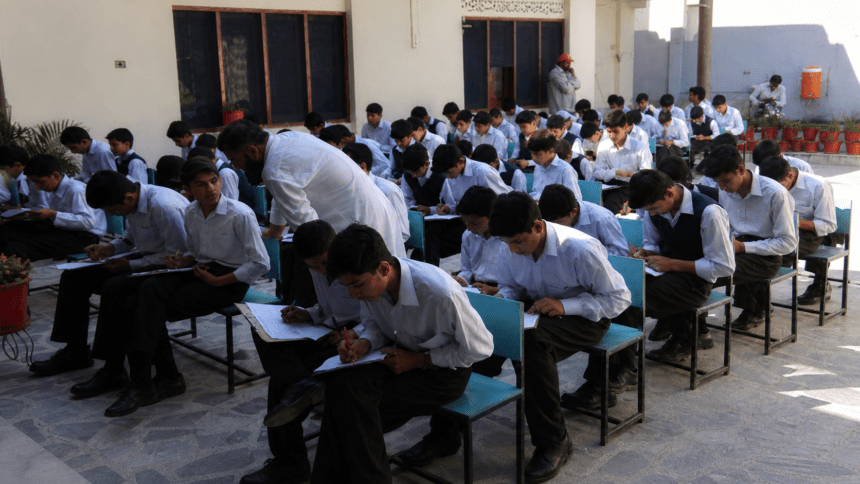
The Federal Board of Intermediate and Secondary Education (FBISE) has rolled out significant changes to its examination structure for overseas students, moving away from the traditional annual system.
Students enrolled in FBISE-affiliated institutions outside Pakistan will now follow a revised assessment model designed to streamline the academic calendar. The board confirmed that the shift aims to align overseas education standards with the evolving digital infrastructure of the federal system, effectively ending the reliance on the legacy examination pattern that has governed the board for decades.
The move marks a departure from the one-size-fits-all approach. By digitizing the examination process, the board intends to reduce the logistical burden on students residing in different time zones. The new protocol introduces a more flexible scheduling window, acknowledging the unique challenges faced by the Pakistani diaspora balancing local curriculum requirements with federal board mandates.
“We recognize the logistical strain on our overseas candidates,” a senior board official said, speaking on condition of anonymity due to the sensitivity of the rollout. He noted that the board spent the last six months auditing exam centers across the Middle East to ensure the new technology could handle the encrypted, real-time data transfers required for the updated papers.
Critics have long argued that the federal board’s overseas exam schedule placed an undue burden on students, often forcing them to sit for exams late at night or during local school hours. The new policy addresses this by utilizing a centralized digital portal that allows for localized timing, provided the integrity of the exam environment is maintained through remote proctoring.
For parents and students, the change brings a degree of relief, though some concerns linger regarding the technical stability of the new platform. The board has pledged to conduct a series of mock exams next month to identify potential glitches before the final papers begin in the spring.
Registration for the upcoming cycle opens next week. The board expects this transition to boost enrollment figures, which had stagnated as many students opted for international O-level equivalents to avoid the rigid scheduling of the federal board.
Whether this technical pivot translates into higher pass rates remains to be seen, but for now, the FBISE has signaled that it is no longer willing to let geography dictate the quality of its testing.