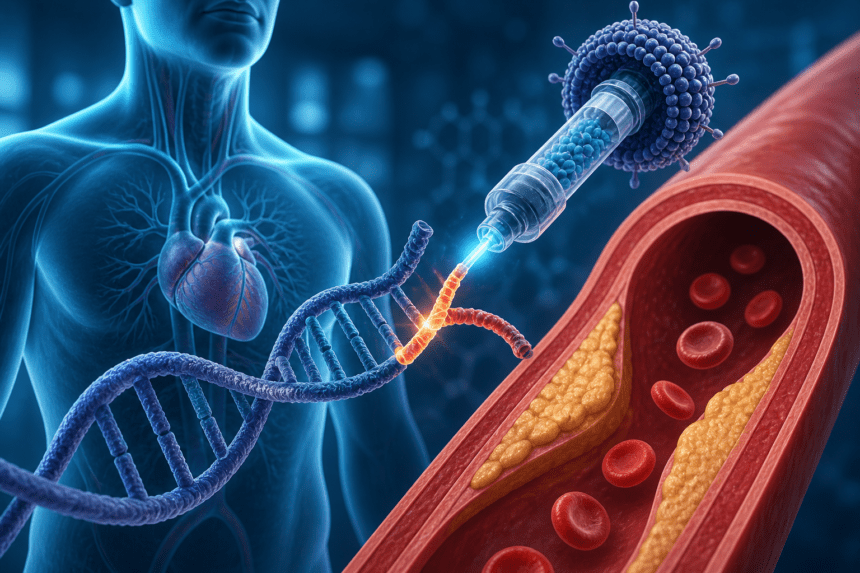
Millions of patients struggling with high LDL cholesterol the kind that clogs arteries and drives heart disease—may soon have an option beyond the daily statin pill.
A new injectable therapy, powered by CRISPR-based gene editing, has shown it can permanently lower “bad” cholesterol levels with a single dose. The treatment, developed by Verve Therapeutics, targets the PCSK9 gene in the liver.
By effectively switching off the gene responsible for high cholesterol, the therapy aims to bypass the need for lifelong medication. Unlike statins, which require daily adherence to keep levels in check, this genetic intervention acts as a software update for the body’s cholesterol production system.
For the roughly 30 million Americans living with familial hypercholesterolemia—a genetic condition that keeps LDL levels dangerously high from birth this could be a life-altering shift. Statins often prove insufficient or cause side effects like muscle pain in these patients. This therapy removes the burden of compliance, addressing the root genetic cause rather than just managing the symptoms.
Early clinical data suggests the impact is significant. In trials, a single infusion led to a sustained reduction in LDL cholesterol, with levels staying low months after the initial treatment. Researchers are now closely monitoring safety profiles, particularly how the body’s immune system reacts to the CRISPR components.
The medical community remains cautious but optimistic. Heart disease remains the leading cause of death globally, and current prevention strategies rely heavily on patients remembering to take pills every single day. This therapy represents a move toward “one-and-done” medicine, potentially reducing the massive burden of cardiovascular events like heart attacks and strokes.
Regulators are watching the next phase of trials to ensure that the long-term effects of permanently silencing a gene are fully understood. If the results hold, the treatment could shift the standard of care from chronic management to a permanent genetic fix.
For now, the focus is on scaling production and proving the therapy’s durability over years, not just months. While it won’t replace statins for the average patient overnight, the technology signals a clear departure from traditional pharmacology and a new frontier in how we treat the world’s most common chronic conditions.