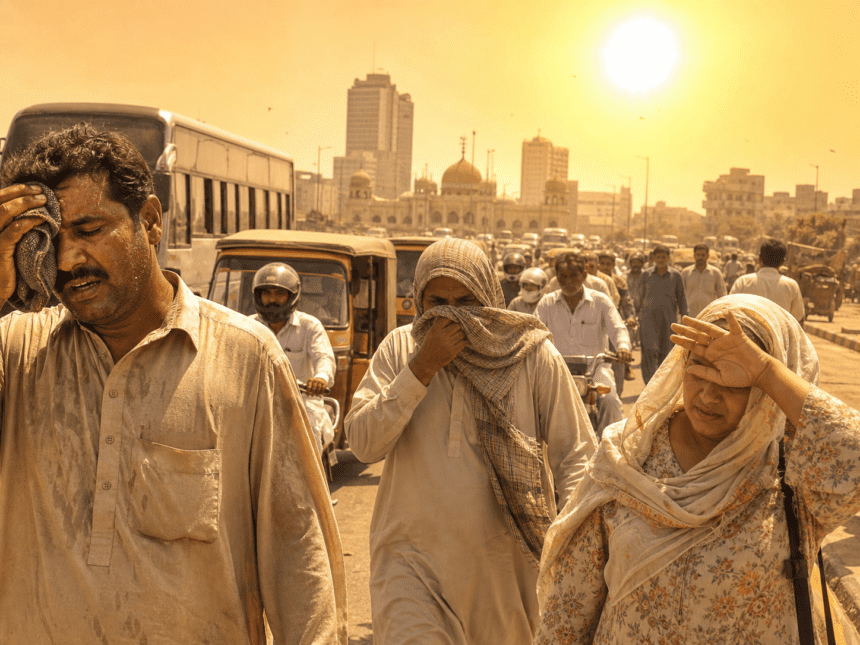
Karachi is heading into a brutal 48-hour stretch of extreme weather. The Pakistan Meteorological Department (PMD) expects the “feels like” temperature to hit 50°C in the city’s outskirts, driven by a dangerous combination of high humidity and shifting wind patterns. While the mercury on the thermometer may read between 38°C and 40°C, the moisture levels hovering near 70% will make the outdoor air feel significantly hotter.
This “heat index” is what sends people to emergency rooms. When humidity is this high, the human body’s primary cooling mechanism, sweat evaporation, simply stops working. The provincial government has yet to declare a formal health emergency, but local hospitals are bracing for the influx. Dr. Sohail Ahmed, an emergency physician at a major city hospital, says the timing is particularly dangerous.
“We see the most severe cases during the mid-afternoon transition when the sea breeze fails to kick in,” he said. “If you don’t have to be outside between noon and 4 p.m., stay inside.” The power grid remains the city’s biggest vulnerability.
As residents crank up air conditioning units, the strain on K-Electric’s distribution network often triggers localized load-shedding. In Karachi, a heatwave isn’t just about the temperature it’s about whether the fan keeps spinning.
Meteorologists point to a shift in low-level winds from the southwest, which are currently bringing in thick, moisture-laden air from the Arabian Sea rather than the usual cooling breeze.
This weather pattern is expected to persist until at least Thursday evening. City authorities have advised residents to increase water intake and avoid direct sun exposure. However, for the millions of daily-wage laborers who work outdoors, these directives offer little practical relief.
The heat isn’t expected to break until the wind direction shifts back to a more stable pattern by the end of the week. Until then, the city is effectively trapped in a high-humidity oven.