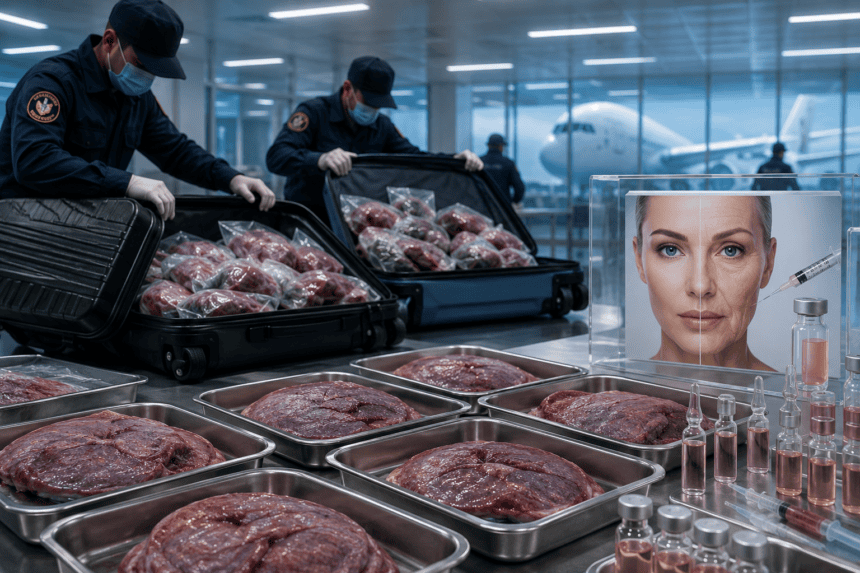
Federal Investigation Agency (FIA) officials at Karachi’s Jinnah International Airport intercepted a massive shipment of 580 kilograms of human placentas on Wednesday. The biological cargo, packed in specialized cooling containers, was destined for overseas laboratories reportedly involved in the production of high-end anti-ageing injections and cosmetic fillers.
The seizure occurred during a routine sweep of the airport’s cargo terminal. Customs and FIA teams became suspicious when documentation accompanying the shipment listed the contents as “biological samples,” yet failed to provide the necessary health certifications or export permits required for human tissue transport.
“We are looking into how such a large quantity was collected and who authorized its transit,” an FIA investigator said on the condition of anonymity. “The scale of this shipment suggests an organized network rather than an isolated incident.”
The trade in human placenta—often marketed in luxury skincare as a source of stem cells and growth factors—operates in a murky legal gray area. While some countries permit the use of placental extracts in controlled medical settings, the unauthorized export of human remains or biological waste is a direct violation of both Pakistani health regulations and international biosafety protocols.
Authorities are now tracing the source of the material. Preliminary investigations point toward a supply chain originating from private hospitals and specialized maternity clinics within the city. Sources close to the investigation suggest that staff at these facilities may have been incentivized to divert placentas that are typically treated as hazardous medical waste.
The confiscated material remains under laboratory analysis to determine if it carries infectious pathogens. Meanwhile, the cargo clearance agent involved in the shipment has been detained for questioning.
As the investigation widens, health officials are bracing for a potential audit of private medical facilities across the province, as questions mount over how a half-ton of human biological material could be processed and packaged for export without triggering internal oversight.