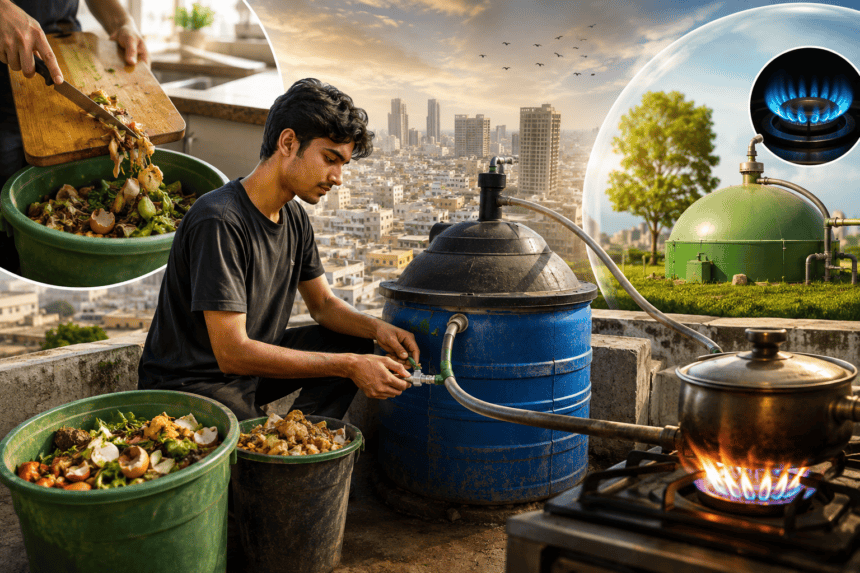
KARACHI — A small-scale energy project in Karachi is turning the city’s mounting organic waste problem into a solution for the ongoing natural gas crisis.
Zeeshan Shah, a local entrepreneur, has developed a compact biogas system that converts household kitchen scraps into methane. For many families in the city’s densely populated neighborhoods, where piped gas pressure often vanishes for hours, the system offers a rare sense of energy independence.
The technology is straightforward. Food waste—peels, leftover vegetables, and fruit scraps—is fed into a sealed digester tank. Anaerobic bacteria break down the organic matter, producing gas that is piped directly to a kitchen stove. A single unit can process several kilograms of waste daily, providing enough fuel for two to three hours of cooking.
“People are tired of waiting for the gas lines to hiss,” Shah said. “They want a fix that doesn’t depend on the utility grid.”
The timing is critical. Karachi has faced chronic gas shortages for years, forcing residents to rely on expensive LPG cylinders or dangerous electric heating coils. With the rising cost of living, these alternatives have become increasingly unaffordable for middle-class households.
Beyond the kitchen, the system produces a nutrient-rich liquid byproduct. Users are repurposing this “slurry” as organic fertilizer for home gardens, closing the loop on household waste.
Energy analysts have long pointed to decentralized power as a potential buffer for Pakistan’s struggling infrastructure. While large-scale biogas plants have faced hurdles in financing and logistics, these household-level units bypass the bureaucracy of centralized distribution.
The startup is currently refining the design to make the units more durable and easier to maintain in Karachi’s humid climate. If adoption grows, it could shave a small but significant percentage off the city’s residential gas demand—a welcome change for a city accustomed to chronic shortages.