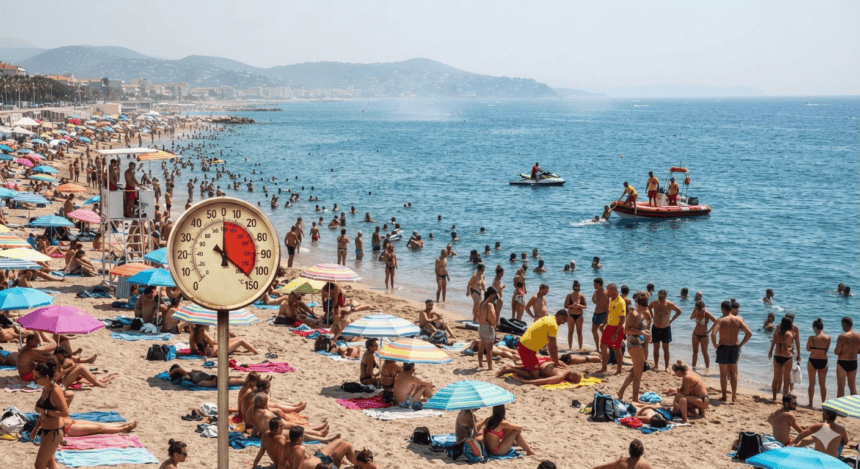
PARIS — France’s public health agency, Santé Publique France, has identified a direct correlation between this summer’s intense heatwaves and a sharp rise in fatal drownings. As temperatures soared across the country, emergency services reported a surge in water-related accidents, forcing officials to re-evaluate how they communicate safety warnings to the public.
The data is stark. During the peak of the recent heatwaves, the number of accidental drownings climbed significantly compared to the same period in previous years. The agency noted that as residents sought relief in lakes, rivers, and coastal waters, the combination of extreme heat and a lack of caution proved lethal.
“People are desperate to cool down, but the environment changes when the heat is this intense,” said a spokesperson for the national lifeguard federation. “We saw a pattern where individuals underestimated the shock of cold water after sitting in 40-degree heat, or simply pushed their physical limits too far.”
The issue isn’t just about the temperature of the water. Emergency responders point to a “heat-induced fatigue” that impairs judgment. When the mercury stays high overnight, sleep deprivation sets in, leaving swimmers less alert and physically weaker than they realize. This, combined with the sheer volume of people flocking to unsupervised swimming spots, created a perfect storm for accidents.
France has spent years trying to curb drowning rates, focusing heavily on youth swimming programs and pool security. However, this summer’s crisis highlighted a blind spot: adult safety in natural, uncontrolled environments. Local mayors in affected regions are now considering temporary bans on swimming in certain river zones, despite the public outcry that follows such restrictions.
The government is now under pressure to shift its messaging. Rather than focusing solely on pool safety, officials are drafting campaigns that specifically warn against the dangers of “heat-seeking” behavior in natural water bodies.
For the families of those lost this summer, the warnings arrive too late. The question remains whether the government’s shift in strategy can prevent a repeat performance if next summer brings the same extreme conditions.