Brushing your hair is a simple part of many people’s daily routines, but have you ever wondered how often you should actually do it? While brushing helps keep hair neat and tangle-free, the ideal frequency depends on your hair type, texture, length, and overall hair health.
Contrary to popular belief, there is no universal rule that everyone should brush their hair 100 strokes a day. In fact, excessive brushing can sometimes do more harm than good.
Why Brushing Your Hair Matters
Brushing helps:
- Remove tangles and knots
- Distribute natural oils from the scalp
- Reduce hair breakage caused by matting
- Improve hair appearance and manageability
- Remove loose hairs that have naturally shed
When done properly, brushing can contribute to healthier-looking hair and a cleaner scalp.
How Often Should You Brush?
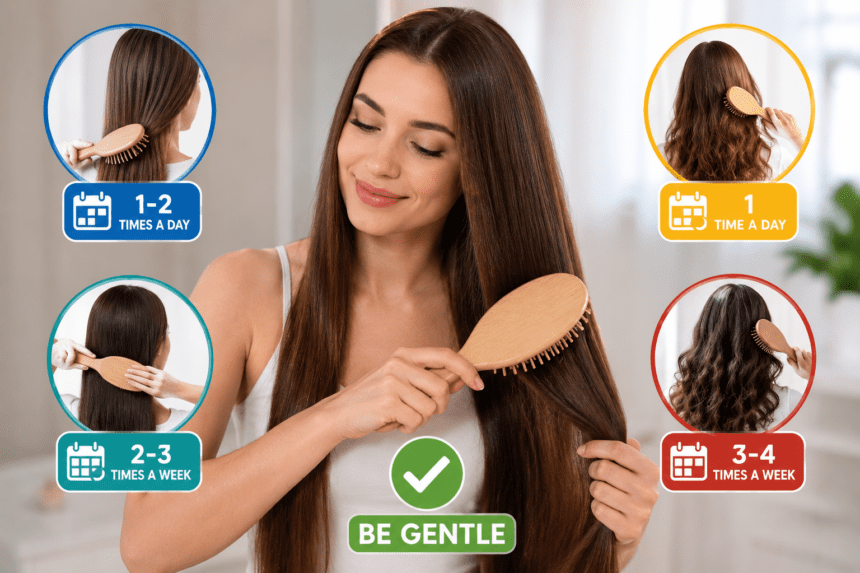
Straight Hair
People with straight hair may benefit from brushing once or twice daily.
Brushing helps spread the scalp’s natural oils throughout the hair shaft, adding shine and reducing dryness.
Wavy Hair
Wavy hair generally requires moderate brushing.
Many experts recommend brushing before washing and gently detangling when necessary to prevent frizz and breakage.
Curly Hair
Curly hair often requires less frequent brushing.
Excessive brushing can:
- Disrupt curl patterns
- Cause frizz
- Increase breakage
Many people with curly hair prefer using a wide-tooth comb or detangling while the hair is damp.
Coily or Textured Hair
Highly textured hair is often more fragile and prone to dryness.
Brushing may only be needed during styling or detangling sessions. Gentle handling is essential to avoid unnecessary damage.
Can You Brush Too Much?
Yes. Overbrushing may lead to:
- Hair breakage
- Split ends
- Increased frizz
- Scalp irritation
- Weakened hair strands
The goal is to remove tangles and distribute oils—not to repeatedly brush hair throughout the day.
Tips for Healthy Hair Brushing
Start at the Ends
Begin brushing near the ends of your hair and gradually work upward. This method helps remove knots gently and minimizes pulling.
Use the Right Brush
Different hair types benefit from different brushes.
Examples include:
- Paddle brushes for long, straight hair
- Wide-tooth combs for curly hair
- Detangling brushes for fragile or tangled hair
Be Gentle
Avoid aggressive brushing, especially when hair is wet, as wet hair is more prone to breakage.
Keep Your Brush Clean
Hairbrushes can collect oil, dirt, and product residue over time.
Clean your brush regularly to maintain scalp and hair hygiene.
What About Wet Hair?
Wet hair is more vulnerable to damage than dry hair.
If you need to detangle wet hair:
- Use a wide-tooth comb
- Apply conditioner or a detangling product
- Work slowly and gently
Avoid forcefully pulling through knots.
Signs You May Be Brushing Incorrectly
You may need to adjust your brushing habits if you notice:
- Excessive hair breakage
- Increased split ends
- Scalp discomfort
- Frizz that worsens after brushing
- Hair strands collecting excessively in the brush
A gentler approach can often improve hair health.
Final Thoughts
The ideal brushing routine varies from person to person. Straight hair may benefit from daily brushing, while curly and textured hair often require less frequent brushing to maintain their natural structure and prevent damage.
Rather than focusing on how often you brush, pay attention to how you brush. Using the right tools, being gentle, and understanding your hair type can help keep your hair healthy, manageable, and looking its best.