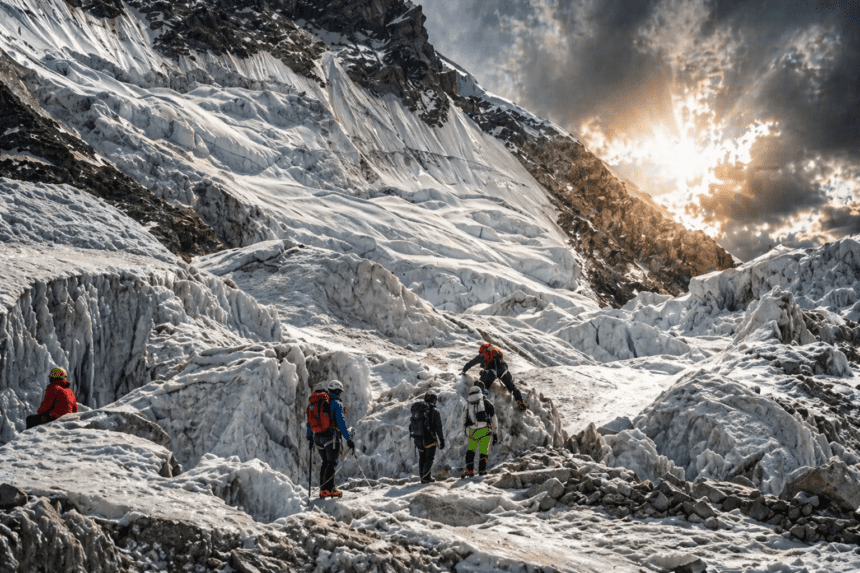
A massive, unstable block of glacier ice has disrupted the main climbing route on Mount Everest from Nepal just as the spring summit season begins to build, forcing delays in route preparation through the Khumbu Icefall — the most dangerous section of the standard south-side ascent. The obstruction, described in recent reports as a giant serac, has slowed the work of the specialist Sherpa team known as the “Icefall Doctors,” who fix ropes and ladders for hundreds of climbers expected on the mountain this season.
The problem is centered in the Khumbu Icefall, the shifting maze of crevasses and towering ice blocks between Everest Base Camp and the upper camps. Climbers and outfitters say the serac is hanging above a key section of the route, creating what has been described as an unacceptable objective hazard for the workers opening the path. That has left many expeditions waiting below while officials and route crews assess how to move safely through or around the danger.
The timing is especially fraught. April is when expeditions settle in, acclimatization rotations begin, and the route toward Camp 1 and Camp 2 is normally established ahead of the narrow summit window in May. A prolonged delay now could compress the climbing calendar later in the season, raising the risk of traffic jams high on the mountain if large numbers of teams are forced into the same weather windows.
That concern is not theoretical. Everest’s Nepal side has struggled for years with crowding during good-weather summit pushes, and outfitters are already worried that any bottleneck at the start of the season could ripple upward. In the Khumbu Icefall itself, delays are more than an inconvenience: the terrain changes constantly, and exposure to collapsing seracs, shifting ladders, and hidden crevasses makes every crossing a serious gamble.
For now, there have been no widely reported deaths linked to this specific route blockage, but the mood around base camp is tense. The Icefall Doctors are widely respected because their work effectively determines whether the season can proceed, and how safely. Their decisions in moments like this tend to shape the pace of the entire Everest spring campaign.
At its core, this is a reminder of something Everest keeps proving, year after year: no matter how commercialized the climbing season becomes, the mountain still sets the terms. And this spring, at least for the moment, a single unstable wall of ice is doing exactly that.