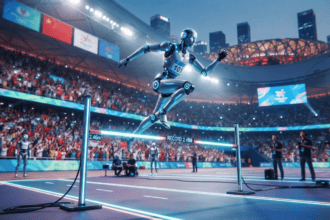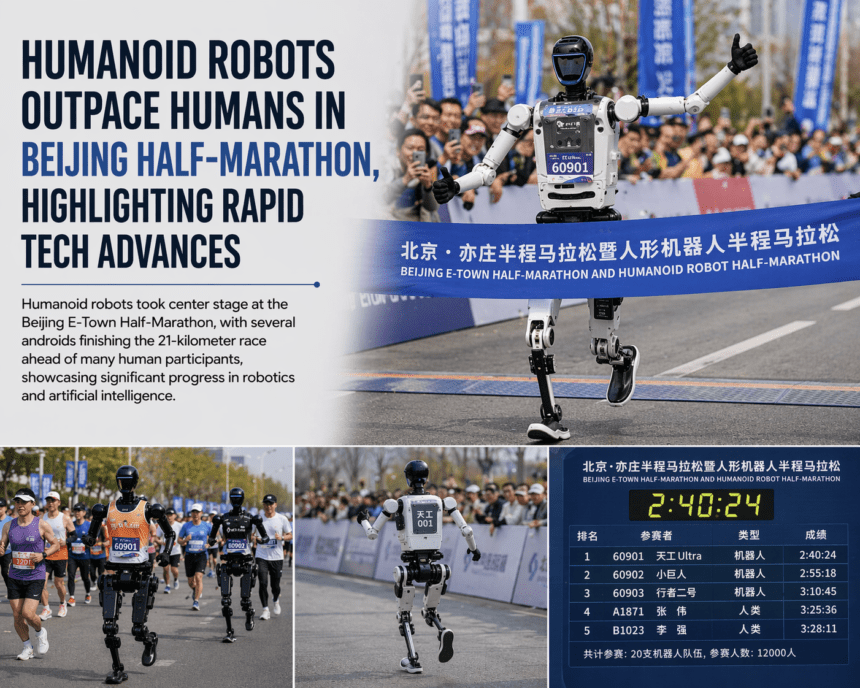
Humanoid robots raced alongside and even surpassed human participants in a Beijing half-marathon, showcasing significant progress in robotics and artificial intelligence.
According to Dawn News citing international reports, the event featured advanced bipedal robots designed to run, balance, and adapt in real-time conditions similar to human runners.
The robots demonstrated improved mobility, endurance, and coordination, with some maintaining steady speeds over long distances—an achievement that was previously difficult for humanoid machines.
Experts say this reflects rapid developments in AI-driven movement systems, sensors, and mechanical design, allowing robots to better navigate complex environments. The race was not just a spectacle but also a test of how far robotics has come in mimicking human physical capabilities. Engineers used the event to evaluate performance factors such as energy efficiency, stability, and response to terrain changes.
Analysts note that such advancements could have wider applications beyond sports, including search and rescue, healthcare assistance, and industrial automation.
However, they also point out that while robots showed impressive performance, they are still far from fully matching human adaptability and decision-making in unpredictable real-world scenarios. The Beijing event underlines how quickly humanoid robotics is evolving, with experts saying future developments could bring even more sophisticated machines capable of working alongside humans in everyday life