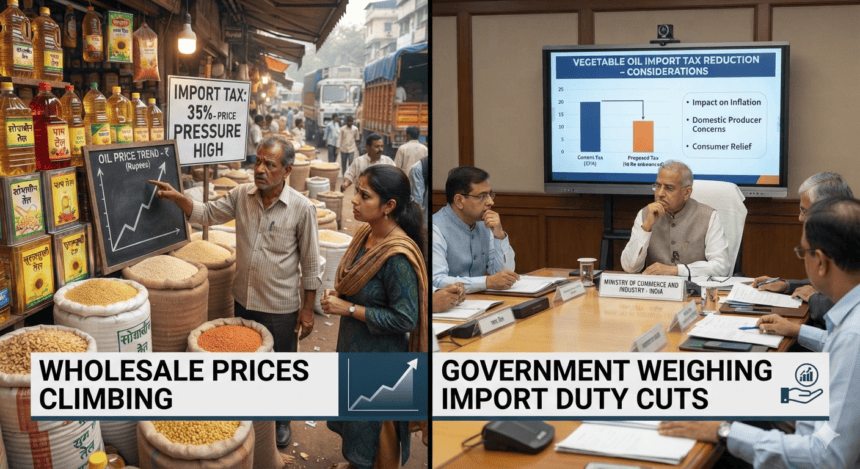
New Delhi is quietly working on a plan to slash import duties on edible oils, a move aimed at curbing domestic prices that have climbed for three consecutive months. Government officials, speaking on condition of anonymity, confirm that the Ministry of Finance is reviewing the current tax structure to provide relief to households before the festive season demand spikes.
The urgency stems from a sharp rise in global prices for palm, soybean, and sunflower oils. Retail prices in India—the world’s largest importer of edible oils—have surged by nearly 15% since June. For the average consumer, this means a tighter grocery budget; for the government, it’s a political headache as food inflation remains a sensitive issue.
“We are monitoring the price trend daily,” a senior official in the Ministry of Consumer Affairs said. “Lowering the duty is an option on the table, but we have to balance it against the interests of local oilseed farmers who are currently in the middle of the harvest season.”
The dilemma is classic: keep taxes high to protect local farmers from cheap imports, or cut them to keep the urban voter happy.
Currently, India imposes a base import duty of 20% on crude soybean and sunflower oil, with a 27.5% total tax when including the Agricultural Infrastructure and Development Cess. For palm oil, the effective duty stands at 5.5%. A reduction in these figures could see prices dip within weeks, but it risks depressing domestic prices, which could lead to protests from farmers’ unions in states like Madhya Pradesh and Maharashtra.
Market analysts suggest that the government might opt for a “surgical” reduction—targeting specific oils that have seen the most drastic price hikes rather than a blanket cut.
“The government doesn’t have much room to maneuver,” said a commodities trader based in Mumbai. “If they cut duties, they risk the ire of the farming lobby. If they don’t, they face the wrath of the common man struggling with high inflation.”
India relies on imports for nearly 60% of its edible oil requirements. While the government has previously used duty cuts to manage inflation, this current cycle is complicated by a weak rupee and volatile shipping costs in the Black Sea region.
Any formal announcement is expected to come by the end of the month. Until then, the market remains in a holding pattern, waiting to see if New Delhi prioritizes the kitchen table or the farm gate.