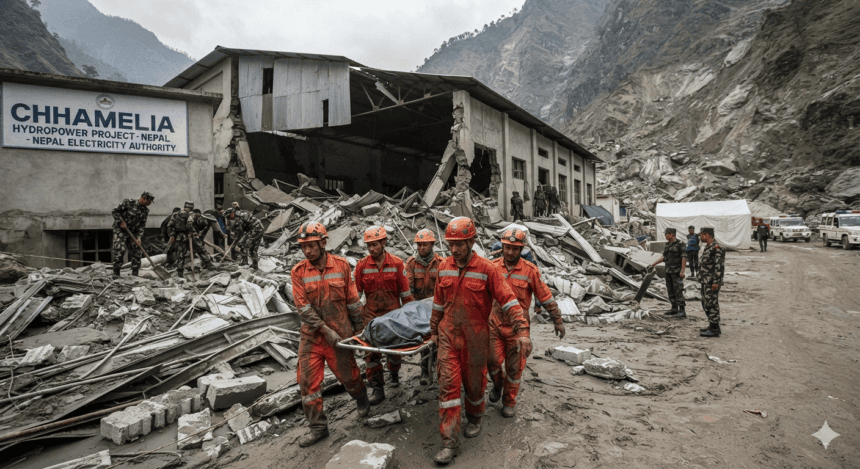
Rescuers pulled the final victims from the wreckage of a hydropower plant in Nepal’s Dhading district today, ending a grim search operation that began after last week’s devastating flash floods. The recovery brings the death toll at the site to 14, marking one of the most concentrated losses of life in the country’s recent infrastructure crisis.
The plant, located along the Trishuli River, was swamped on Friday when record-breaking monsoon rains caused the river to burst its banks. Mud, boulders, and debris surged through the facility’s lower levels, trapping staff who were mid-shift.
“We had little hope of finding anyone alive after the first 24 hours,” said Ram Prasad, an official with the District Disaster Management Committee. “The force of the water didn’t just flood the building; it pulverized the structural integrity of the lower floors.”
For families gathered at the site, the end of the search is a hollow closure. Many had waited for days in the rain, hoping for a miracle that the geography of the disaster made impossible. The recovery effort was hampered by unstable ground and the constant threat of secondary landslides, forcing teams to move with agonizing slowness.
The disaster has ignited a fierce debate over safety standards for Nepal’s rapidly expanding hydroelectric sector. Critics argue that many plants were built in high-risk flood zones without sufficient protection against the increasingly erratic monsoon patterns fueled by climate change.
Energy ministry officials are now facing calls for a nationwide audit of all river-based power projects. While the government has promised a probe into whether warning systems functioned as intended, survivors and local activists remain skeptical.
“We keep building these projects without respecting the river’s path,” said environmental policy analyst Dr. Anita Koirala. “When the monsoon hits, the river always reclaims its space. We are just beginning to see the true cost of ignoring that reality.”
As the water begins to recede, the focus shifts from rescue to the long process of clearing the debris and determining if the plant can ever return to operation. For now, the site remains a restricted zone, serving as a stark reminder of the fragile balance between Nepal’s energy ambitions and its volatile terrain.