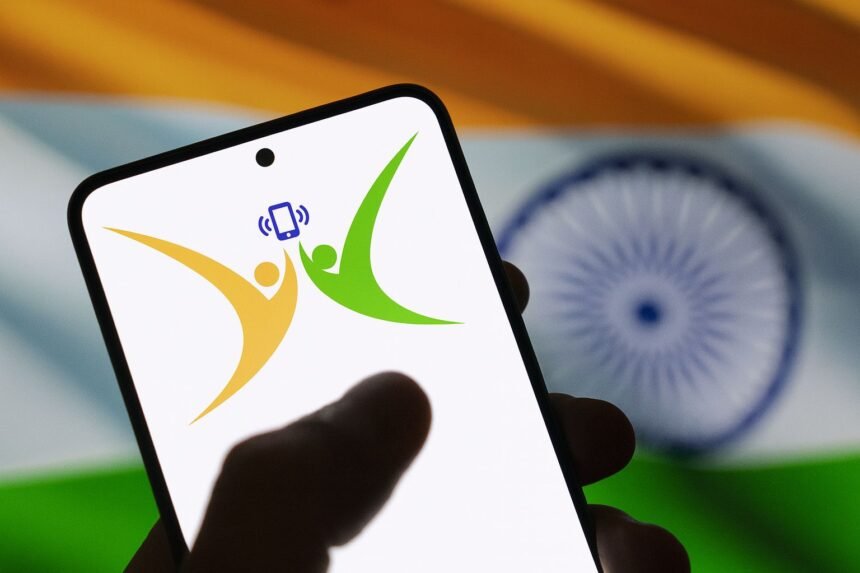
India’s government has withdrawn its order requiring smartphone companies to preload the state run cybersecurity app Sanchar Saathi on all new devices, following strong criticism from politicians, privacy groups, and major tech companies.
The reversal came just a week after the government privately directed companies like Apple, Samsung, and Xiaomi to install the app which users would not be allowed to delete within 90 days. The plan immediately raised alarms about privacy and possible government surveillance.
In a statement on Wednesday, the Ministry of Communications confirmed that the pre installation order would no longer be mandatory. The decision followed protests from opposition parties, critical newspaper editorials, and concerns from global manufacturers. Apple and Samsung had already indicated they would not comply with the directive.
Government officials had earlier defended the policy, saying the app helps track and block stolen phones. But the order also barred users from disabling the app, intensifying fears of data misuse.
This U turn echoes another policy reversal last year, when India rolled back a proposed laptop import restriction after pressure from the United States. Critics say such sudden decisions create uncertainty for businesses and damage investor confidence.
Tech lawyer Mishi Choudhary welcomed the reversal but warned that unpredictable policy-making continues to trouble the tech sector.
Opposition parties questioned the legality of forcing a “non removable app” on citizens. Congress leader Randeep Singh Surjewala demanded answers in Parliament, warning that such apps could contain “backdoors” that compromise user privacy.
The government said it reversed course because the app was already gaining popularity on its own, with around 600,000 new users joining since Tuesday. Officials maintained that the app is safe and designed only to protect citizens from cyber fraud.
Internationally, only Russia has a similar precedent, requiring a state backed messaging app to be preloaded on devices. India, meanwhile, has faced privacy concerns before most notably during the pandemic, when a compulsory contact-tracing app was later made optional after public outcry.
The latest reversal highlights growing tensions between digital safety efforts and citizens’ right to privacy in one of the world’s largest smartphone markets.