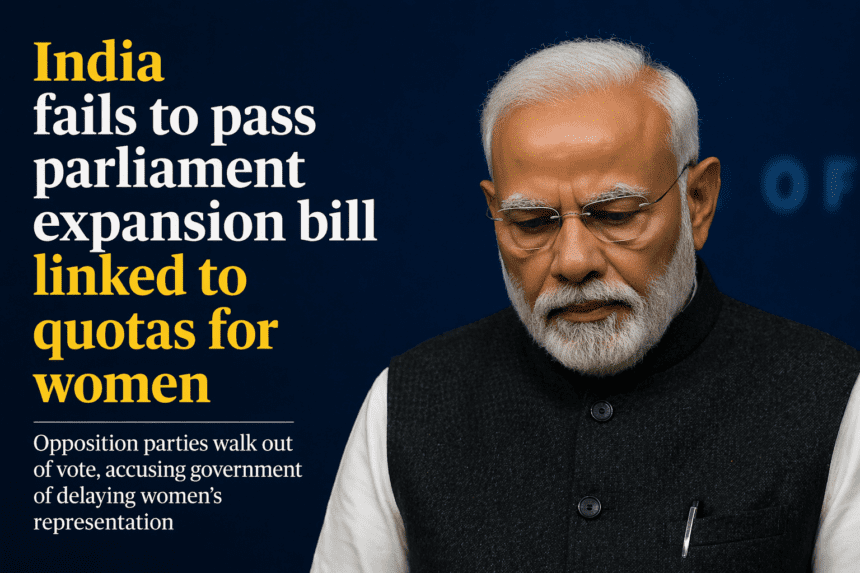
India’s lower house failed to pass a constitutional amendment tied to 33% reservation for women in Parliament and state legislatures because it was linked to a controversial delimitation and seat-expansion plan. The proposal needed a two-thirds majority, but opposition parties blocked it.
Reports say the plan would have expanded the Lok Sabha from 543 seats to roughly 850 by 2029, while also implementing the women’s quota. The main dispute was not over women’s representation itself, but over redrawing constituencies in a way critics said could favor northern states and the ruling BJP at the expense of southern states.
This matters because India had already passed the 2023 Women’s Reservation law, but its implementation was delayed until after delimitation. The failed 2026 bill was presented as a way to move that process forward faster, but it collapsed because of a political fight over electoral boundaries.