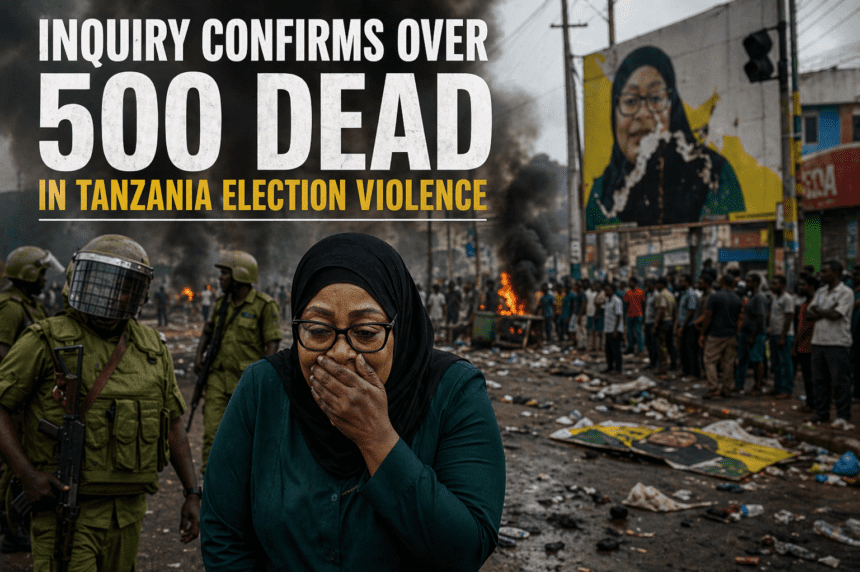
Tanzania’s recent electoral cycle left at least 500 people dead, according to a scathing independent inquiry released this week. The findings shatter the government’s previous claims of a peaceful democratic process, pointing to a systematic campaign of state-sponsored intimidation and brutal suppression.
The report, compiled by a coalition of human rights observers and forensic investigators, details a harrowing timeline. Violence peaked during the final week of voting, as security forces moved to consolidate the incumbent administration’s grip on power. Bullet wounds, signs of torture, and mass disappearances form the core of the evidence presented.
Most casualties occurred in the urban centers of Dar es Salaam and Arusha. Witnesses described a coordinated effort by paramilitary groups to prevent opposition strongholds from reaching polling stations. These units didn’t just disrupt voting; they targeted organizers and vocal critics of the ruling party.
“We aren’t looking at isolated scuffles,” said lead investigator Dr. Amina Juma. “This was a calculated strategy to silence dissent through fear. The scale of the loss is staggering.”
The government has predictably dismissed the report as “politically motivated misinformation.” Officials argue the numbers are inflated and claim the unrest was instigated by opposition agitators seeking to destabilize the nation. Yet, the investigators provided geolocation data and hospital records that directly contradict the state’s official narrative of a stable election.
The international community has remained largely silent, a move that local activists describe as a betrayal. With the death toll now verified, the pressure is mounting for an international tribunal to intervene.
For the families of those lost, the numbers are more than statistics. They represent a fundamental collapse of the rule of law. As the country grapples with these revelations, the question isn’t whether the election was fair, but how a nation recovers when its own institutions turn against its people.