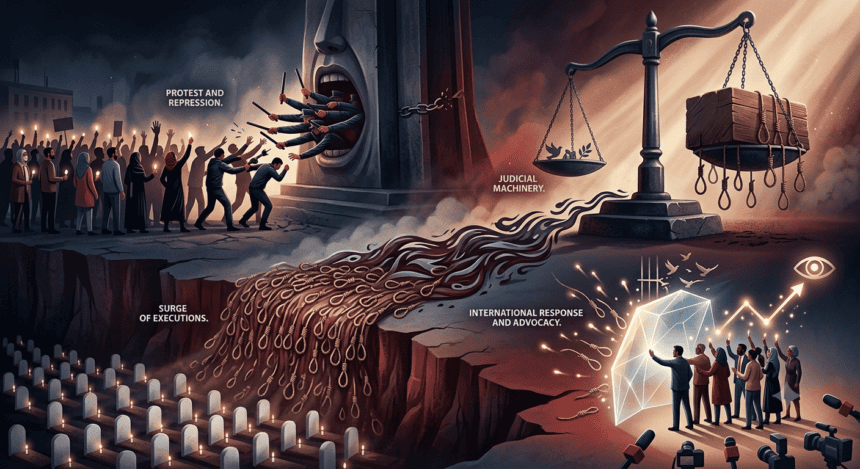
TEHRAN — Iran has accelerated its use of the death penalty, executing at least 40 individuals in the past month alone, according to human rights monitors. The surge marks a sharp escalation in the state’s judicial campaign, targeting both political dissidents and those convicted of drug-related offenses.
The uptick follows a pattern of heightened state control since the “Woman, Life, Freedom” protests of 2022. While the international community remains largely focused on regional geopolitical tensions, the machinery of Iran’s judicial system continues to operate behind closed doors, often with minimal due process.
“The state is using the gallows to signal absolute authority,” said a researcher at a London-based rights group tracking the figures. “When the news cycle shifts elsewhere, the pace of these executions only seems to quicken.”
Most of those recently put to death were sentenced in closed-door trials. Families of the accused frequently report being denied access to legal counsel or being kept in the dark about execution dates until after the fact. In several cases, the bodies were buried by authorities without informing relatives, a tactic rights groups describe as a deliberate attempt to suppress public mourning and prevent protests.
Drug-related charges remain the most common justification for the executions. However, the legal threshold for these crimes in Iran is notoriously broad. Legal observers note that the judicial system frequently bypasses international fair trial standards, relying on coerced confessions obtained during prolonged periods of solitary confinement.
The United Nations has repeatedly called for a moratorium on the death penalty in Iran, citing “deep concern” over the lack of transparency in the legal process. Tehran consistently rejects these interventions, framing the executions as a necessary measure for maintaining national security and public order.
For the families of those on death row, the reality is a constant, agonizing wait. The current surge suggests that domestic dissent, once vocalized in the streets, is now being met with a calculated, lethal silence from the state.
As international pressure remains largely symbolic, the families of detainees are left with few avenues for appeal — and even fewer reasons for hope.