BAGHDAD — More than 50 Pakistani nationals remain trapped in Iraqi detention centers after being smuggled into the country under the guise of religious pilgrimage. Most of the detainees are young men from Punjab who paid human traffickers upwards of 1.5 million PKR each, hoping for transit to Europe. Instead, they found themselves in a cycle of exploitation, extortion, and physical abuse.
The families back home are now receiving frantic, short-lived phone calls. The message is consistent: traffickers are demanding additional payments to secure their release, while Iraqi authorities continue to process them as illegal migrants.
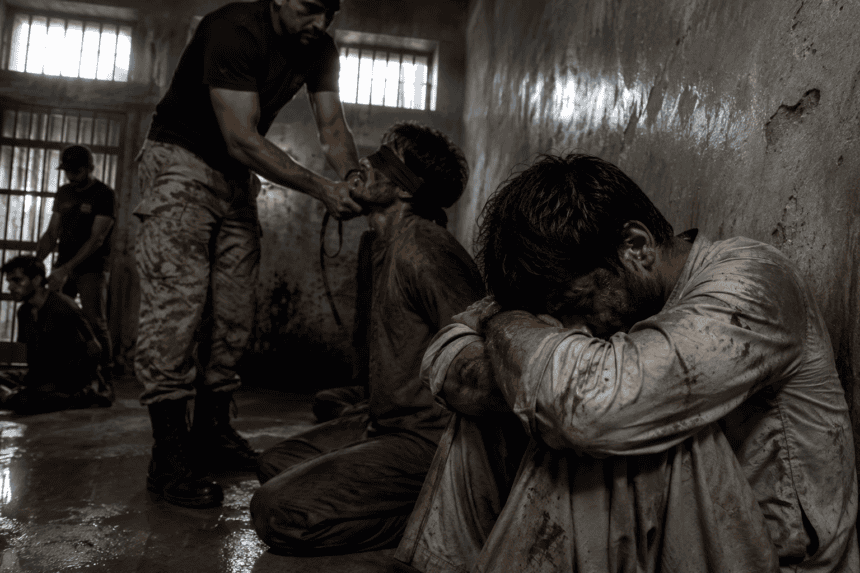
“They beat them with iron rods,” said a relative of one detainee from Gujrat, speaking on the condition of anonymity for fear of retaliation. “My brother called once. He sounded broken. He said they haven’t eaten properly in days and the guards don’t care if they live or die.”
The situation turned critical last month when Iraqi security forces raided a series of makeshift safehouses in Karbala and Najaf. The migrants, who had arrived on Ziarat visas, were immediately arrested for visa overstaying and lack of legal documentation. The traffickers, who had promised them work permits and passage to the West, vanished the moment the raids began.
For the Pakistani embassy in Baghdad, the challenge is twofold. They are currently struggling to verify the identities of those detained, as many had their passports confiscated or destroyed by the smuggling rings upon arrival. Without travel documents, the Iraqi government refuses to expedite deportation.
The Pakistani government’s response has been slow. While the Federal Investigation Agency (FIA) in Islamabad claims to have launched a crackdown on the specific networks operating out of Gujrat and Mandi Bahauddin, the families see little progress.
“The FIA keeps telling us they are ‘investigating,’” the relative said. “While they investigate, our boys are rotting in cells and being tortured by guards who think they are criminals.”
Human rights observers point to a systemic failure in how these migration routes are managed. Smugglers exploit the religious visa system—which is designed for ease of access for pilgrims—to bypass standard immigration checks. Once the migrants land in Iraq, the traffickers abandon them, leaving them vulnerable to both local law enforcement and the criminal gangs that operate within the detention facilities.
The Iraqi authorities have not released an official statement regarding the allegations of torture, maintaining that the detainees are being held strictly for immigration violations.
As diplomatic channels remain stalled, the families are left to negotiate with the same traffickers who put their sons in prison. With no clear path to repatriation, these young men remain caught in a geopolitical blind spot, where the cost of their freedom is rising by the day.