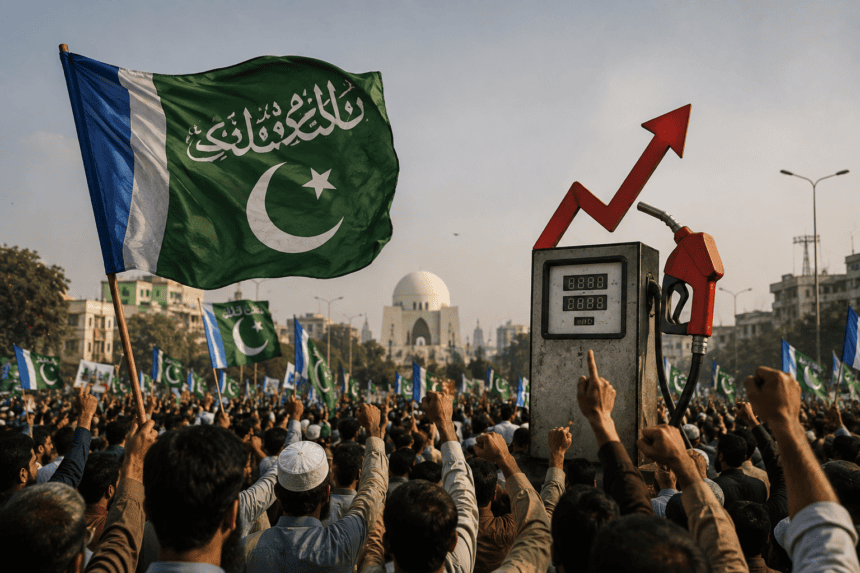
LAHORE — Jamaat-e-Islami (JI) has announced a countrywide protest campaign for this Sunday, challenging the federal government’s latest hike in petroleum development levies. Party leadership labeled the move an “economic assault” on the middle and lower classes, demanding an immediate reversal of the tax burden.
The protest call comes barely 48 hours after the government adjusted fuel prices, citing the need to meet revenue targets set by the International Monetary Fund (IMF). For JI Emir Hafiz Naeem-ur-Rehman, the timing is tone-deaf. He told supporters in Lahore that the administration is “bleeding the public dry” to satisfy international lenders while shielding the elite from austerity measures.
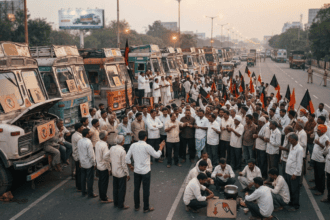
The move marks a hardening of the party’s stance against the current economic trajectory. While opposition parties have voiced criticism in the National Assembly, JI is taking the frustration to the streets. They plan to hold demonstrations in major urban centers, including Karachi, Lahore, and Islamabad, with local chapters tasked to coordinate with traders’ unions.
Economic analysts view the timing of the protest as a potential signal of rising public discontent. With inflation already hovering at painful levels, the increase in the petroleum levy acts as a multiplier effect on the cost of transport and food staples. The government maintains that these levies are essential to stabilize the budget, yet the political cost of such decisions is becoming increasingly difficult to contain.
Previous protests led by the JI have often centered on utility bills and electricity surcharges, but this latest pivot to fuel prices strikes at the core of industrial and household logistics. The government has yet to issue a formal response to the protest call, but sources within the ruling coalition suggest they are monitoring the potential for civil disruption in key commercial hubs.
Sunday’s demonstrations will serve as a litmus test for JI’s ability to mobilize beyond its core base. If the turnout exceeds expectations, the government may face renewed pressure to reconsider the pace of its fiscal adjustments—or risk losing the fragile narrative of economic recovery.