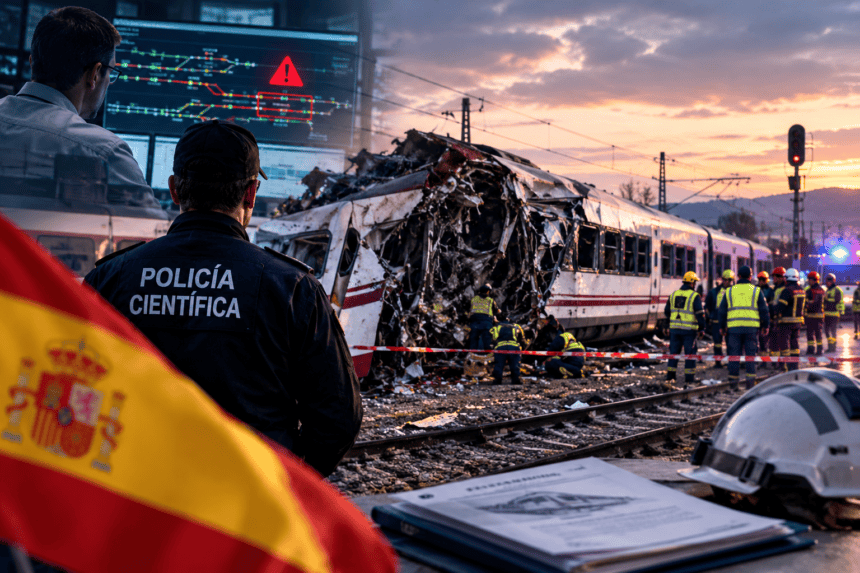
A series of systemic failures in Spain’s rail traffic control system triggered the high-speed train collision that killed three people and left dozens injured last week.
Government investigators pinpointed a breakdown in communication between the signal tower and the train’s onboard computer. The error forced a regional passenger train onto a track occupied by a stationary freight convoy, leaving the engineer with no time to brake.
“The protocols in place were bypassed,” said a transport official briefed on the preliminary investigation. “We aren’t looking at mechanical failure here. We are looking at a human and procedural oversight that should have been caught by the secondary monitoring system.”
The crash happened just outside the station in the northern province of Galicia. It’s a route notorious for its tight curves and heavy freight traffic, yet the signaling system—designed to prevent exactly this type of overlap—failed to trigger an automatic emergency stop.
Questions are now mounting over why the secondary safety net, an automated system meant to override human error, did not engage. Engineers are currently pulling logs from the control center to determine if the software was manually disabled or if it suffered a complete blackout during the shift change.
For the families of the victims, the explanation offers little comfort. The train was carrying commuters heading home for the evening, a routine trip that turned into a disaster in under ten seconds.
The transport ministry has suspended the two controllers on duty during the incident. They face an internal probe while police work to secure the crash site for forensic reconstruction.
Transport Minister Óscar Puente promised a full audit of all regional signaling hubs by the end of the month. He faces pressure to prove that Spain’s rail network—long considered one of the safest in Europe—hasn’t developed dangerous blind spots in its rush to modernize.
Until the audit finishes, the government has ordered a mandatory manual check for every train entering the Galicia corridor. It’s a temporary measure that adds twenty minutes to every journey, but for the ministry, it’s the only way to ensure the tracks remain clear.