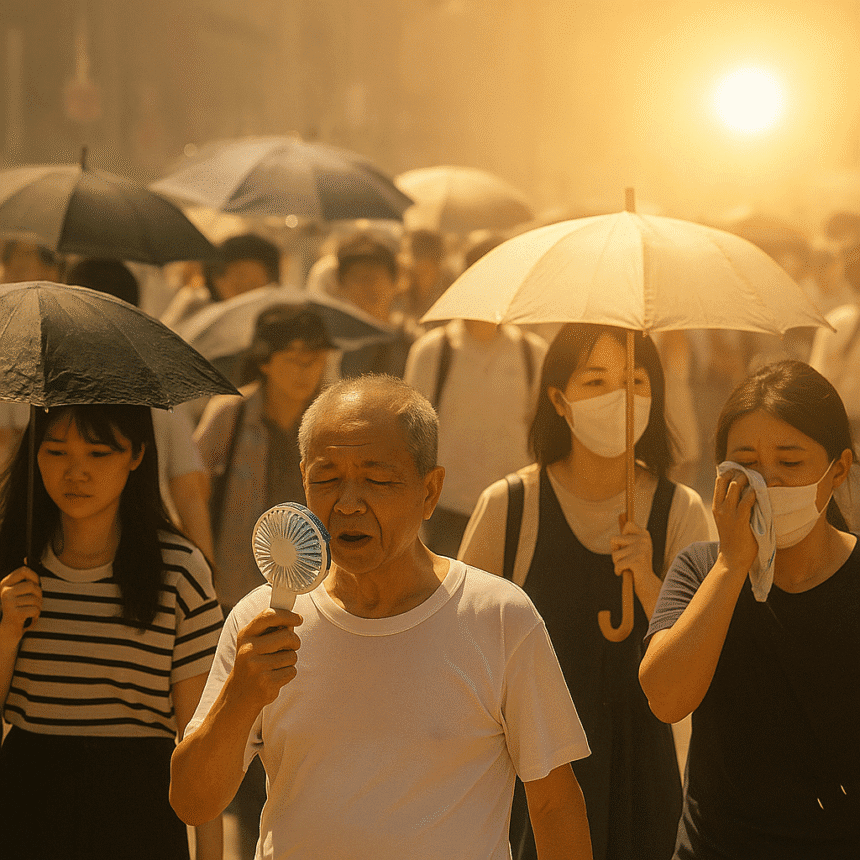
TOKYO: Authorities in Japan and South Korea have issued urgent heat warnings as both countries grapple with unprecedented temperatures that have left hospitals overwhelmed and residents at risk of heatstroke.
On Thursday, Japan recorded its hottest day ever at 41.2°C in Tamba, Hyogo Prefecture, breaking the previous record set in 2020. Officials said 271 out of 914 observation points across the country reported temperatures above 35°C, with 39 locations setting new highs. The Japan Meteorological Agency warned the blistering heat, fueled by a powerful high pressure system, would persist.
Meanwhile, South Korea endured its longest-ever streak of “tropical nights”, with Seoul experiencing overnight lows above 25°C for 22 consecutive days in July the longest stretch since weather records began in 1907. On Wednesday, the capital marked its hottest July night in history at 29.3°C, with forecasts suggesting more records could fall.
Health authorities in both nations reported surging medical emergencies. In Japan, 10,804 people over half aged 65 or older were hospitalized for heat-related illnesses in the week ending 21 July, the highest tally this year. Sixteen deaths were confirmed. South Korea recorded 13 heat-related fatalities this summer, triple last year’s toll for the same period.
Meteorologists warned the persistence of hot air masses was compounding the crisis. “When warm conditions linger, the heat doesn’t fully dissipate it accumulates day after day,” explained Youn Ki-han, director of Seoul’s forecast division.
The scorching weather is also hitting tourism hotspots. In Kyoto, where temperatures crossed 40°C for the first time on record, foreign visitor numbers continue to soar, adding pressure to health services.
Experts link the intensity of these heatwaves to human driven climate change, which is fueling increasingly erratic and extreme weather. Japan last year recorded its joint-hottest summer and its warmest autumn since records began 126 years ago. Scientists warn such extremes will become more frequent unless global emissions are curbed.