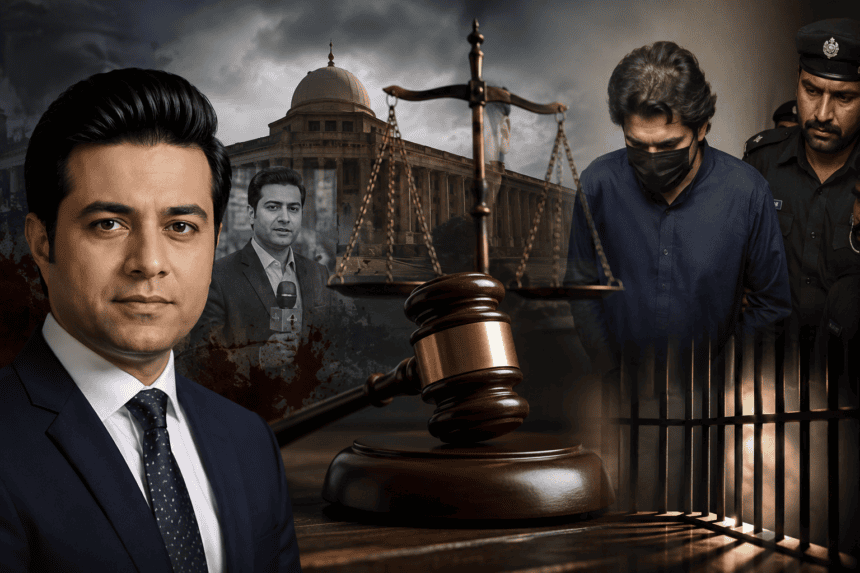
A Karachi anti-terrorism court handed down a double death sentence on Tuesday to Atif Zaman, the primary suspect in the 2019 murder of television anchor Mureed Abbas and his associate, Khizar Hayat. The verdict ends a high-profile legal saga that gripped the media industry and sparked public outrage over the nature of the targeted killings.
Judge of the Anti-Terrorism Court (ATC) announced the ruling after years of proceedings. Zaman was found guilty of gunning down Abbas and Hayat in the Defence Housing Authority (DHA) area on the night of July 9, 2019. The court also imposed a fine of Rs1 million on the convict, to be paid as compensation to the families of the victims. Failure to pay will result in an additional six months of imprisonment.
The motive behind the double homicide was rooted in a failed multi-million rupee investment. Investigators found that Abbas and Hayat had invested heavily in Zaman’s tire business. When the returns failed to materialize, the victims pressured Zaman for a refund.
Zaman didn’t just walk away from the debt; he chose a lethal exit.
On that night in July, Zaman met the two men at a cafe in DHA. Witnesses described a brief, heated exchange before Zaman pulled a pistol and opened fire. He attempted to kill himself immediately after, shooting himself in the chest, but he survived the injury and was taken into police custody.
The defense team faced a steep climb, as the prosecution presented forensic evidence, CCTV footage from the cafe, and eyewitness accounts that placed Zaman at the center of the shooting. The court dismissed the defense’s attempts to frame the incident as a sudden provocation, ruling that the cold-blooded nature of the act met the criteria for terrorism charges.
For the families of Mureed Abbas and Khizar Hayat, the verdict provides a measure of closure, though it cannot reverse the loss.
“We have waited years for this day,” said a family representative outside the courtroom. “The law has finally recognized the brutality of what happened that night.”
Zaman remains in custody and is expected to appeal the decision in the Sindh High Court. For now, the sentence serves as a final judgment on a case that highlighted the dangers of unregulated private investments and the fragility of professional relationships turned sour.