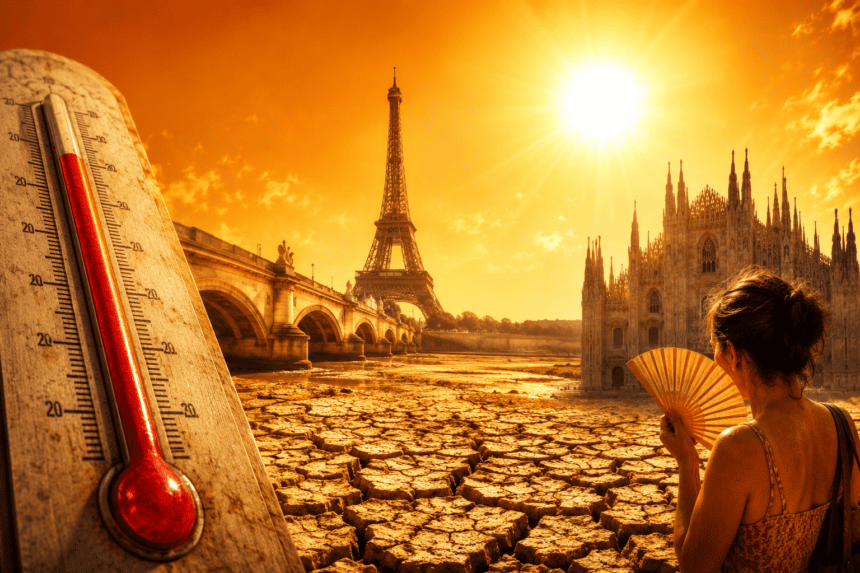
June temperatures across Western Europe shattered long-standing records this month, as an unrelenting heatwave pushed mercury levels into territory rarely seen before the height of summer. From the Iberian Peninsula to the fringes of the Alps, the heat arrived early and stayed, forcing authorities to issue emergency warnings as power grids and infrastructure buckled under the strain.
In Spain and France, daily highs routinely climbed past 40°C (104°F), breaking local records that had stood for decades. Climate scientists point to a persistent “heat dome” trapping hot air over the continent, a phenomenon that has become increasingly frequent as global temperature baselines shift upward.
The economic and human toll is mounting. Farmers in France’s cereal-growing regions are reporting stunted crop yields as parched soil turns to dust. In the UK, transport authorities imposed speed restrictions on rail lines to prevent tracks from buckling under the extreme thermal expansion.
“We are seeing the seasonal norms shift right before our eyes,” said Dr. Elena Rossi, a climate researcher who tracks European weather patterns. “What we once considered an extreme event for mid-July is now hitting us in the first weeks of June. The window for recovery between these heat spikes is disappearing.”
Public health officials have struggled to keep pace. Hospitals in several regions reported a spike in heat-related admissions, particularly among the elderly and those in urban centers where the “heat island” effect prevents temperatures from dropping significantly at night. In Madrid, officials opened public pools early and extended operating hours for air-conditioned community centers, a move usually reserved for the peak of July and August.
The pattern isn’t just about the heat; it’s about the timing. By arriving before the summer solstice, this heatwave has disrupted the natural cooling cycles that typically sustain European agriculture through the early growing season. Reservoirs in parts of Italy and Spain are already hovering at critical lows, raising difficult questions about water rationing as the continent heads into the traditionally hotter months.
As the heat subsides, meteorologists are already looking toward the horizon. The atmospheric conditions that fueled this record-breaking month show no signs of structural change, leaving Europe bracing for what might come next.