Toxic Ship-Cleaning Waste Polluting the Mediterranean Sea, Say Scientists
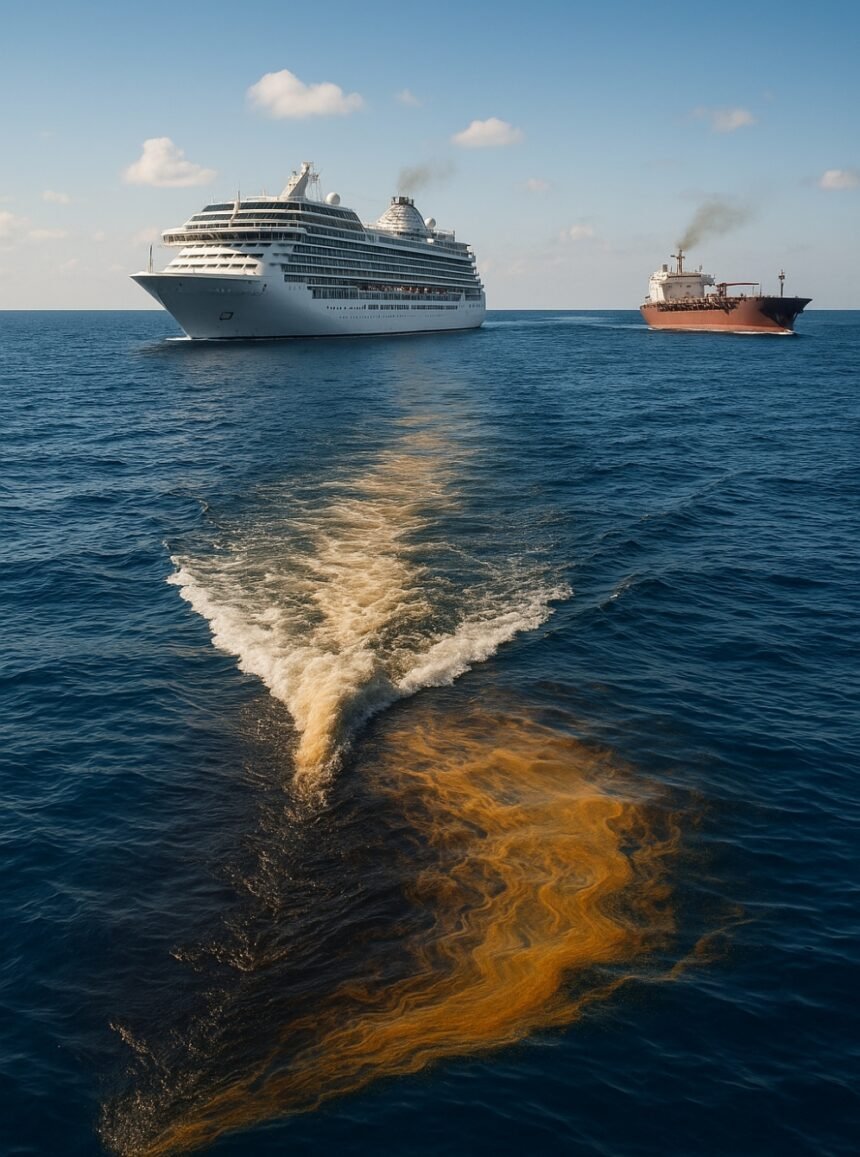
As cruise and cargo ship traffic surges in the Mediterranean, a ship-cleaning technology designed to reduce air pollution is now under fire for polluting the sea. Known as “scrubbers,” these exhaust gas cleaning systems filter sulphur from ship emissions but discharge toxic wastewater directly into the ocean, endangering marine ecosystems and public health.
Experts warn that this “solution” to air pollution is transferring the problem from the sky to the sea. While the technology helps ships meet international sulphur emission standards, it allows continued use of high-sulphur fuel oil generating millions of tons of acidic, metal-filled washwater dumped into coastal waters.
The Mediterranean, a closed sea with limited ability to dilute pollutants, is particularly vulnerable. By 2025, over 5,000 ships globally use scrubbers, including many in Mediterranean ports like Barcelona and Civitavecchia, which have seen over 3 million tons of toxic water discharged. Cruise ships alone contribute to 70% of this pollution in top ports, despite making up just 5% of the fleet.
Scientific studies reveal that scrubber water contains a harmful mix of heavy metals, PAHs, nitrogen compounds, and acid-forming chemicals. These pollutants affect phytoplankton, sea urchins, mussels, and other vital organisms, disrupting reproduction, development, and long-term survival. In one study, just 5% concentration of diluted scrubber water reduced mussel larvae development by 50%.
Despite growing scientific evidence, international regulations lag behind. While France and Spain have banned open-loop scrubbers in some zones, Italy still allows discharges even in ports. Environmentalists argue this contradicts the UN Convention on the Law of the Sea, which prohibits solving one pollution problem by creating another.
Campaigners and marine scientists urge immediate action. They call for a unified Mediterranean policy, stricter international regulations, and a shift toward genuinely clean fuels. “It’s not a real solution,” says a tugboat engineer in Rome. “It’s just shifting the damage.”
As research deepens and public awareness grows, the pressure mounts on policymakers and the shipping industry to rethink how “clean” technologies are impacting the oceans we depend on.