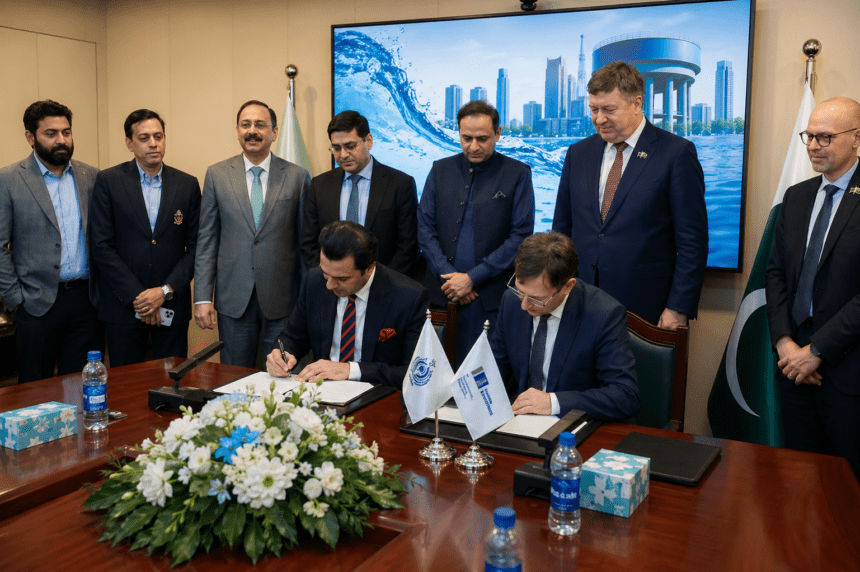
Karachi’s crumbling water infrastructure is set for a multi-million euro lifeline. The European Investment Bank (EIB) has finalized plans to fund a major upgrade for the Karachi Water and Sewerage Corporation (KWSC), aiming to stem the city’s chronic supply shortages and repair a decaying distribution network.
The deal, which has been in negotiations for months, targets the city’s aging pipelines and outdated pumping stations. For Karachi’s 20 million residents, the project promises more than just new pipes; it aims to shrink the influence of the infamous “tanker mafia” by ensuring water actually reaches household taps.
“This isn’t just about pouring concrete,” said a project consultant familiar with the deal. “It’s about digitizing the flow. If you can track the water, you can stop the theft.” The investment comes at a breaking point for the city.
KWSC has struggled for years with massive revenue losses, illegal hydrants, and a population growth rate that long ago outpaced its capacity. The EIB funding contingent on strict governance reforms—is designed to force a shift in how the utility operates. Technical teams are expected to begin site assessments next month.
The focus remains on the K-IV water project and the rehabilitation of the Hub Dam supply lines, which have suffered from decades of deferred maintenance. Critics argue that previous international loans were swallowed by bureaucratic inefficiency and corruption.
To avoid a repeat, the EIB has reportedly tied the release of funds to quarterly performance benchmarks. If the KWSC fails to meet these targets specifically regarding billing transparency and leak reduction—the funding taps could be turned off just as quickly as they were opened. For now, the agreement offers a rare glimmer of hope for a city where clean, running water remains a luxury for many.
The real test begins when the construction crews break ground and when the first invoices for the new infrastructure are actually paid.