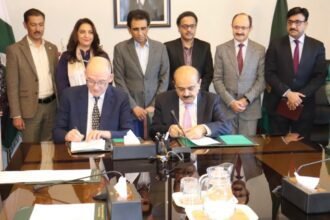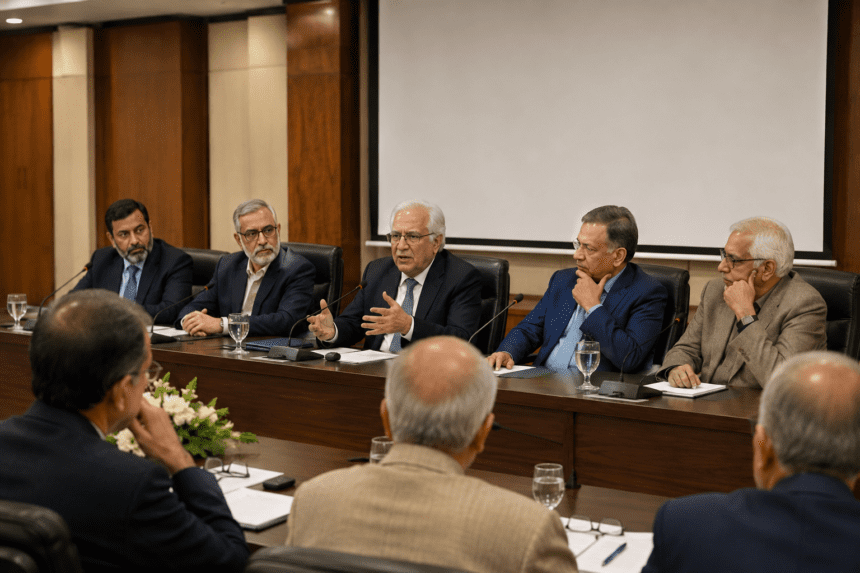
Karachi: A seminar held at the University of Karachi (KU) brought together economists, academics, and policy experts to evaluate Pakistan’s Federal Budget 2026–27, with participants emphasizing the need for structural reforms to ensure sustainable economic growth and fiscal stability.
During the seminar, speakers said that while the budget seeks to maintain fiscal discipline and support economic recovery, long-term progress will depend on reforms in taxation, export promotion, education, and digital governance. They stressed that sustainable development cannot be achieved without strengthening these key sectors.
Participants highlighted the importance of broadening the tax base, improving revenue collection, and creating a business-friendly environment to encourage investment and industrial growth. They also urged the government to focus on export-led policies to reduce the country’s dependence on external borrowing and improve economic resilience.
The speakers further emphasized that investment in quality education, technological innovation, and digital governance is essential to building a competitive economy. They noted that transparent governance and efficient public service delivery can play a vital role in accelerating national development.
Concluding the seminar, participants called for coordinated efforts by the government, private sector, academia, and civil society to implement long-term economic reforms. They expressed the view that consistent policy implementation and institutional strengthening are critical to achieving inclusive and sustainable growth under the Federal Budget 2026–27.