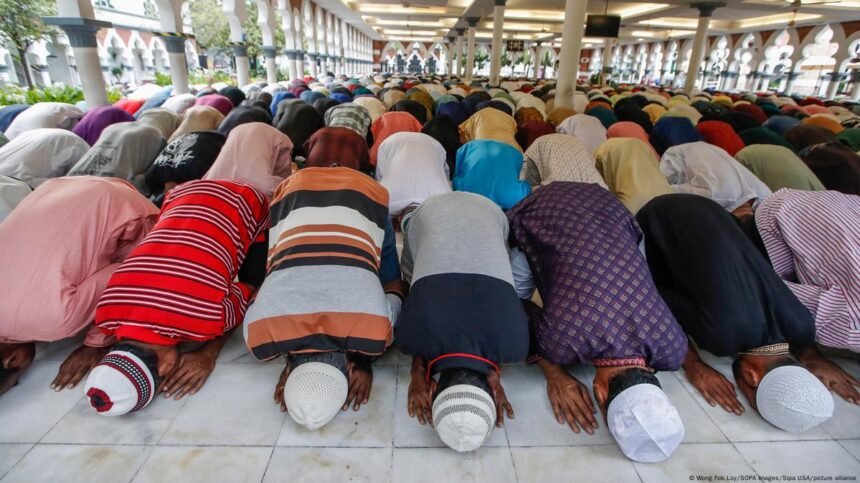
KUALA LUMPUR: Malaysia is witnessing a sharp rise in support for conservative Islamic policies, especially among younger and more religious Malay voters, reshaping the country’s political landscape and posing challenges for Prime Minister Anwar Ibrahim’s administration.
The growing influence of the opposition coalition, Perikatan Nasional (PN) particularly the Malaysian Islamic Party (PAS) has intensified public debates around Islamization. In the 2023 state elections, PN achieved a major victory by securing 146 out of 245 seats, strengthening its grip in the northern and east coast states such as Kelantan, Terengganu, Kedah, and Perlis. These regions have since seen stricter Islamic policies, including attempts to enforce hudud laws, dress codes, and gender segregation a movement often referred to as the “green wave.”
Although Malaysia remains one of Southeast Asia’s most ethnically diverse nations, public dissatisfaction with what many perceive as a liberal ruling agenda has fueled a tilt toward conservative politics. A 2023 Pew Research Center survey revealed that 86% of Muslim Malaysians support Sharia becoming official law, while 65% believe the Quran should heavily influence legislation.
Despite Anwar’s government promoting a “Madani” (moderate Islam) approach, critics say little differentiates its policies from the opposition when it comes to religious matters. The administration has been accused of reinforcing Islamic governance structures and pandering to conservative sentiments in response to PN’s growing appeal.
Some experts warn that this increasing religiosity may not be entirely genuine. Critics like businessman Shah Hakim Zain and former politician Wee Choo Keong argue that religion is being used as a political tool especially during elections to consolidate power. “When political parties are unsure or weak, they turn to religion,” said Zain.
Analysts also point to a worrying trend of foreign Islamist groups relocating operations to Malaysia. According to the Nordic Counter-Terrorism Network, Malaysia’s weak counter-radicalism measures are attracting extremists who seek to exploit rising religious sentiments.
The implications are serious in a multi-ethnic society where Malays make up around 60% of the 35 million population, with Chinese and Indian communities comprising significant minorities. Decades of pro-Malay policies have already strained inter-ethnic relations, and further Islamization could deepen divides.
James Chin, a leading Southeast Asia expert, argues that Malaysia’s tilt toward political Islam stems from systemic failures poor governance, job shortages, and a lack of quality education. “Young Malays are disillusioned and turn to Islam as a solution,” said Chin. He warned of a future where Islamic education replaces national curricula, promoting a narrow worldview centered on political Islam.
While PAS may not pose an immediate threat to Anwar’s parliamentary majority, its ideological rise represents a long-term challenge to Malaysia’s secular and inclusive foundations.