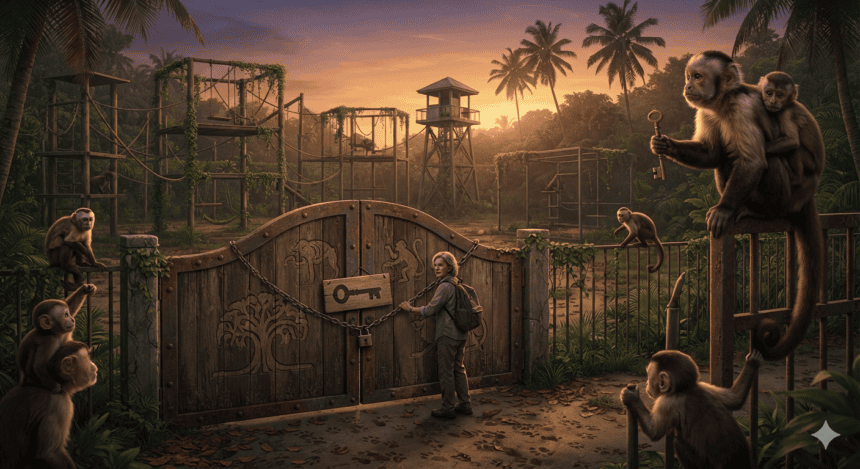
MIAMI — The tropical canopy that defined Monkey Jungle for over six decades has gone silent. The landmark attraction, which allowed visitors to walk through wire-mesh tunnels while primates roamed free in the surrounding forest, has permanently shuttered its gates.
The closure marks the end of a unique experiment in animal exhibition. Founded in 1933 by Joseph DuMond, the park became a staple of South Florida tourism. It wasn’t a traditional zoo; it was a 30-acre subtropical forest where the monkeys held the territory and the humans were the ones behind the barriers.
For years, the sanctuary faced mounting pressure from animal rights organizations. The United States Department of Agriculture (USDA) issued a series of citations regarding animal welfare, specifically citing inadequate veterinary care and structural issues within the primate enclosures. These regulatory battles drained the facility’s resources and tarnished its reputation as a conservation leader.
The facility’s decline wasn’t sudden. It was a slow erosion caused by aging infrastructure and shifting public attitudes toward keeping wild animals in captivity. While the park once marketed itself as a “jungle where humans are caged,” modern visitors grew increasingly uncomfortable with the sight of primates in artificial environments, regardless of the park’s open-air design.
The legal and financial strain reached a breaking point this year. Maintenance costs for the sprawling, hurricane-prone site became unsustainable. When the management finally decided to pull the plug, the primary challenge shifted to rehoming the remaining population—a mix of Java macaques, spider monkeys, and capuchins—many of whom had spent their entire lives on the property.
Former employees describe a site that had lost its identity long before the final padlock was placed on the gate. “The magic that was there in the 90s just faded,” said one former staffer who worked at the site for nearly a decade. “It became about keeping the lights on rather than the animals.”
The property sits on prime South Florida real estate, and developers are already eyeing the acreage. For now, the jungle remains quiet, leaving behind a 61-year legacy that mirrors a broader, nationwide transition: the slow disappearance of the roadside animal attraction in favor of accredited, modern conservation centers.
The monkeys have been moved to new sanctuaries, but the cages remain—a rusted, overgrown monument to an era of wildlife interaction that no longer has a place in the modern world.