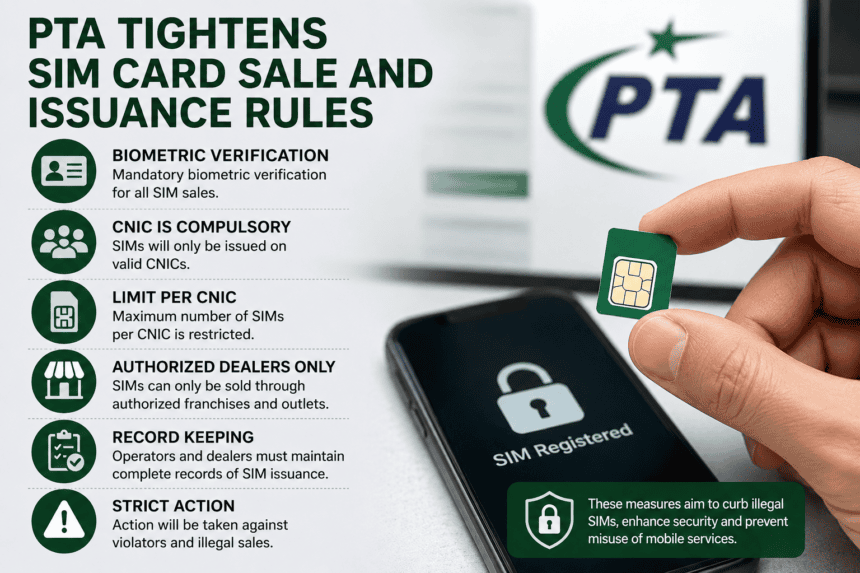
ISLAMABAD — The Pakistan Telecommunication Authority (PTA) has officially tightened the screws on SIM card sales, moving to a mandatory multi-finger biometric verification system (MBVS) to shut down the illegal trade of mobile connections.
This isn’t just a technical update; it’s a direct hit at the “silicon thumb” scams where retailers used forged fingerprints to activate thousands of SIMs. Under the new rules, anyone buying a new SIM or replacing an old one must provide fingerprints from different fingers as prompted by the system in real-time.
The PTA’s new Standard Operating Procedures (SOPs) require retailers to use Live Finger Detection (LFD) devices. These machines can tell the difference between a human finger and a silicone mold. If a retailer is caught bypassing these checks, they face immediate blacklisting and heavy fines.
Official data shows that thousands of SIMs were previously linked to identity theft and used in fraudulent calls or grey traffic. By forcing a multi-finger check, the regulator makes it nearly impossible for a single stolen biometric scan to be reused across multiple activations.
For the average user, the process takes a few minutes longer at the counter. You’ll need your original CNIC and your physical presence — sending a relative to pick up a SIM on your behalf is no longer an option. The limit remains five SIMs per CNIC, but the verification process is now significantly more rigorous.
Telecom operators have already started upgrading their nationwide franchises. Those who haven’t moved to the MBVS-compliant devices by the deadline risk losing their license to sell new connections.
The crackdown follows a series of security breaches where thousands of illegal SIMs were recovered during raids in major cities. “The goal is simple: one person, one verified identity,” a PTA official said during a recent briefing. “The era of bulk-activated SIMs sitting in a drawer is over.”