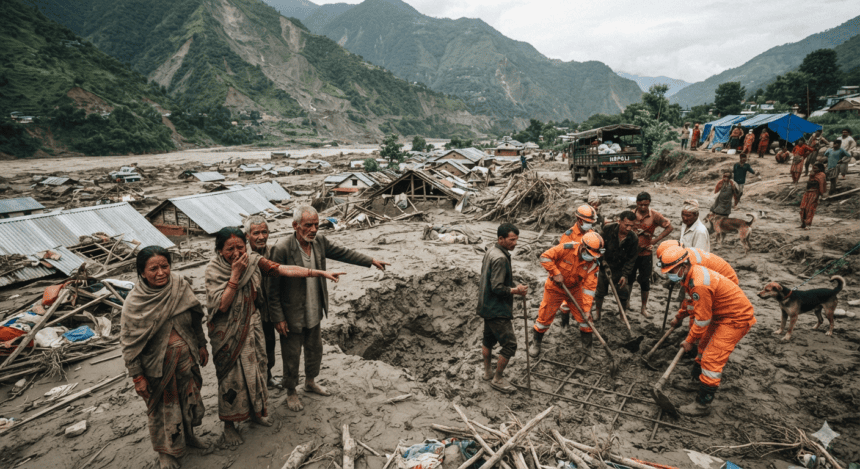
KATHMANDU — Families in Nepal’s central districts are scouring thick layers of riverine silt and debris with their bare hands, driven by the grim reality that scores of their loved ones remain trapped beneath the mud.
Days after the most intense rainfall in decades triggered catastrophic landslides and flooding, the official death toll sits at over 200. Local officials and rescue workers on the ground, however, admit the number is a floor, not a ceiling.
“We are finding bodies every few hours,” said a police officer stationed near the worst-hit area in Kavrepalanchok. “The mud is heavy, shifting, and deep. We know there are more people under there, but we are running out of time.”
The disaster struck overnight Friday, catching thousands in their sleep. As the Sun Kosi and other major rivers surged past their banks, they didn’t just flood homes; they obliterated entire settlements, burying them under a slurry of rock, trees, and mud.
For the survivors, the wait for heavy machinery has been agonizing. Narrow, treacherous mountain roads, many of which have been severed by landslides, have forced rescue teams to rely on hand tools and basic equipment. The bottleneck has left villages isolated, with survivors forced to lead their own recovery efforts while battling the stench of decay and the threat of waterborne disease.
“They talk about aid coming from Kathmandu, but the road is gone,” said a resident who lost his home in the deluge. “We don’t need promises. We need someone to help us move this earth before the rain starts again.”
Government officials have acknowledged the logistical nightmare. With communication lines flickering and bridges washed away, coordinating a nationwide response has proved difficult. Prime Minister K.P. Sharma Oli has promised a redoubled effort, but for those standing atop the wreckage of their former lives, the state’s presence feels distant.
As the sun sets, the search operations slow, hampered by the lack of lighting and the instability of the terrain. Each morning brings a renewed, desperate rhythm: the sound of shovels hitting stone and the quiet dread of what the next scoop of mud might reveal.
The immediate crisis is search and rescue. The long-term reality is a landscape permanently altered, with thousands now homeless and the monsoon season refusing to provide a clear exit. Until the debris is cleared, the true cost of this tragedy remains buried.