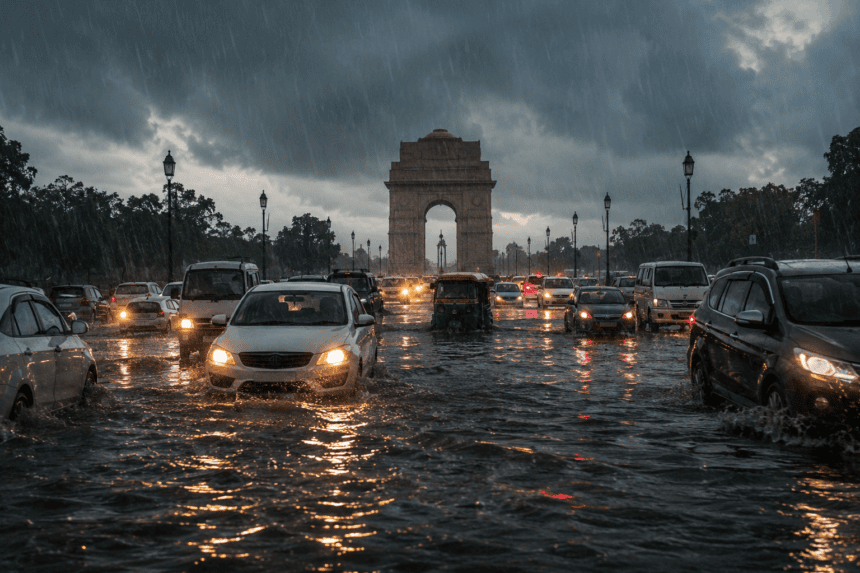
New Delhi remains on high alert this morning as unrelenting monsoon rains have turned major thoroughfares into rivers, paralyzed public transport, and triggered widespread urban flooding. The India Meteorological Department (IMD) issued a red alert for the capital, warning of continued heavy rainfall that has already breached critical drainage thresholds in several low-lying districts.
Commuters faced a brutal start to the day. Key arteries including the Ring Road and Outer Ring Road saw gridlock lasting for hours, while reports of waterlogging emerged from ITO, Minto Bridge, and parts of South Delhi. Municipal authorities scrambled to deploy high-capacity pumps, but the sheer volume of water overwhelmed the city’s aging storm-water drainage network.
The human cost of the weather system is mounting. At least three separate incidents of wall collapses were reported in the city’s outskirts, leading to emergency rescue operations. Local hospitals have been placed on standby, with disaster management teams patrolling vulnerable areas to monitor potential structural failures in older neighborhoods.
“The intensity of this spell caught the drainage systems off guard,” an urban planning expert familiar with the capital’s infrastructure said. “When you get this much water in such a compressed window, the design capacity of the city’s pipes simply doesn’t matter anymore.”
Schools across the National Capital Region have shuttered their gates, with district administrations ordering a shift to remote learning to keep children off the flooded streets. Power grids are also showing strain; multiple neighborhoods reported localized outages as humidity and water seepage triggered safety trips in sub-stations.
The IMD’s latest bulletin offers little reprieve. Forecasters expect the current system to linger for at least another 24 hours, meaning the cycle of rain, traffic chaos, and emergency intervention will likely persist through the night.
For a city already struggling with air quality and heat extremes, this week’s deluge serves as a blunt reminder of the fragility of Delhi’s infrastructure under the pressure of unpredictable weather patterns. As the rain continues to hammer the rooftops of the capital, the focus shifts from recovery to simply keeping the city afloat.