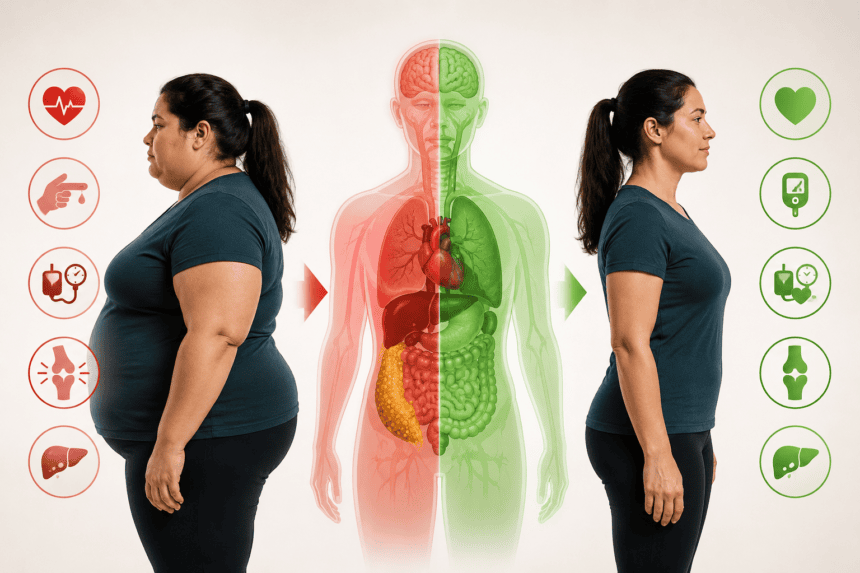
For years, Body Mass Index (BMI) has been one of the most commonly used measurements for determining whether a person is underweight, overweight, or obese. It is simple, inexpensive and easy to calculate.
But BMI has a major limitation: it tells us about a person’s weight in relation to height, not necessarily about their actual health or body composition.
A person can have a high BMI because they have significant muscle mass, while another person with a BMI in the so-called normal range may carry excess body fat around important organs.
This has led researchers and health experts to reconsider how obesity should be defined and diagnosed.


What Is BMI?
BMI is calculated using a person’s weight and height.
It has traditionally been divided into categories such as underweight, normal weight, overweight and obesity.
The measurement became popular because it provides healthcare professionals with a quick way to classify weight at the population level.
However, BMI does not directly measure:
- Body fat
- Muscle mass
- Fat distribution
- Metabolic health
- Blood sugar control
- Blood pressure
- Physical fitness
This means two people with exactly the same BMI can have very different health profiles.
Why Body Fat Distribution Matters
Where fat is stored can be extremely important.
Fat accumulated around the abdomen and internal organs, sometimes referred to as visceral fat, is more strongly associated with metabolic problems than fat stored in some other areas of the body.
Excess visceral fat can contribute to insulin resistance, inflammation and an increased risk of cardiovascular disease.
This is why waist circumference and waist-to-height measurements may provide additional information beyond BMI.
Obesity Is More Than a Number
Modern thinking increasingly views obesity as a complex chronic health condition, rather than simply having a high body weight.
Two people with the same weight may have very different levels of physical health.
One may have healthy blood pressure, normal blood sugar and good physical fitness, while another may have diabetes, sleep problems, high blood pressure or difficulty performing everyday activities.
A more complete assessment therefore looks at how excess body fat is affecting the body.
What Could New Definitions Change?
New approaches to defining obesity may place greater emphasis on actual health consequences.
Doctors may consider factors such as:
- Excess body fat
- Waist measurements
- Blood pressure
- Blood glucose
- Cholesterol
- Physical function
- Breathing problems
- Sleep-related disorders
- Cardiovascular risk
This could help distinguish between people who simply have a higher body size and those whose excess adiposity is actively affecting their health.
Why This Matters for Patients
A more detailed definition could reduce unnecessary focus on the number on the weighing scale.
Instead of asking only, “What is your BMI?” healthcare professionals could ask broader questions:
How much body fat do you have?
Where is it stored?
Is it affecting your organs or metabolism?
Can you perform normal physical activities comfortably?
This approach may produce a more meaningful picture of health.
Could BMI Become Useless?
Not necessarily.
BMI can still be useful as a screening tool, especially when used across large populations.
The problem occurs when BMI is treated as a complete diagnosis.
Healthcare professionals can combine BMI with other measurements and clinical information to make a more accurate assessment.
A More Personalized Approach
The future of obesity assessment may involve greater personalization.
Instead of placing everyone into categories based on one number, doctors may consider body composition, metabolic health, physical function and individual risk factors.
This could help people receive more appropriate advice and treatment.
The Bigger Picture
The debate surrounding obesity definitions reflects a broader shift in medicine.
Healthcare is increasingly moving away from relying on a single measurement and toward understanding the whole person.
BMI can provide useful information, but it should not be the only thing used to judge someone’s health.
A number on a scale cannot tell the complete story of what is happening inside the body.