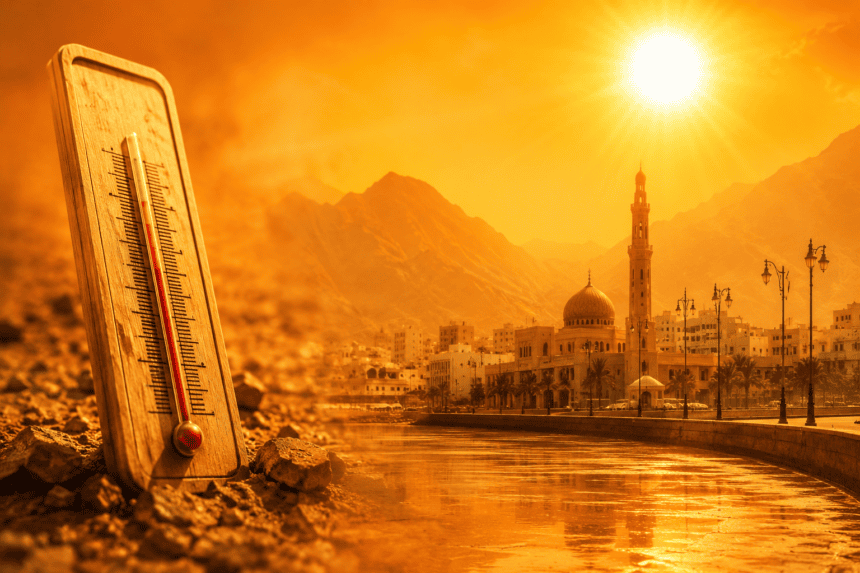
Oman’s meteorological office issued a high-alert warning Tuesday as temperatures across the Sultanate surged toward 47°C (116.6°F). The extreme heat has prompted authorities to restrict outdoor labor during peak hours, citing an immediate risk of heat exhaustion for the country’s large workforce.
The Civil Aviation Authority confirmed that the intense thermal dome currently sitting over the Arabian Peninsula will likely persist through the weekend. While coastal areas are seeing slightly lower readings due to humidity, the interior deserts and regions near the Al Hajar Mountains are bearing the brunt of the record-breaking spike.
The Ministry of Labor is now strictly enforcing a midday work ban, requiring all construction and outdoor industrial sites to halt operations between 12:30 p.m. and 3:30 p.m. This isn’t just a regulatory formality; hospitals in Muscat have already reported a steady uptick in patients presenting with dehydration and heat-related stress.
“We are seeing a shift in intensity,” said a local meteorologist. “It isn’t just the peak temperature that’s concerning, but the lack of cooling during the overnight hours. The thermal mass in the urban centers is keeping the mercury trapped well above 35°C even after midnight.”
For the average resident, the advice is blunt: stay indoors. The national emergency response teams have mobilized cooling stations in public spaces, while the Ministry of Health has launched a campaign urging residents to avoid direct sun exposure.
This heatwave arrives as Oman continues to grapple with the broader impacts of climate change, which scientists say is causing more frequent and prolonged extreme weather events in the Gulf. Previous years saw these temperatures typically arrive in late June or July; this year’s early onset has caught many off guard.
As the sun sets today, the relief will be minimal. With no immediate end to the high-pressure system in sight, the Sultanate remains in a state of high readiness, waiting for the weather front to shift.