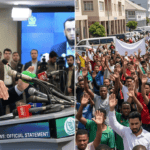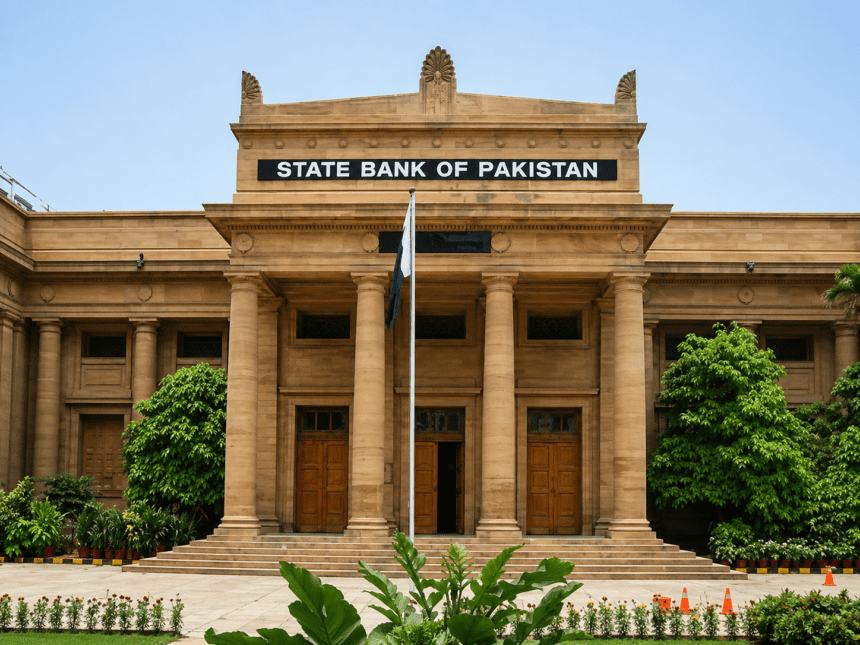
Karachi, May 5, 2025 — Pakistan’s central bank lowered its key policy rate by 100 basis points to 11%, a bigger-than-expected move that underscored just how sharply inflation had cooled in recent months. The State Bank of Pakistan said the new rate would take effect from May 6.
The decision came after the bank’s Monetary Policy Committee said inflation fell steeply in March and April, helped by lower administered electricity prices and a continued decline in food inflation. Core inflation also eased, giving policymakers room to cut more aggressively while still keeping the real interest rate in positive territory.
What made the move stand out, frankly, was the size of it. Several analysts had been bracing for either no change or a more modest 50-basis-point cut, so the full percentage-point reduction landed as a surprise in the market. Business Recorder, citing market participants, said the cut came in above expectations. Geo News reported that most brokerage surveys had leaned toward a hold or a smaller reduction.
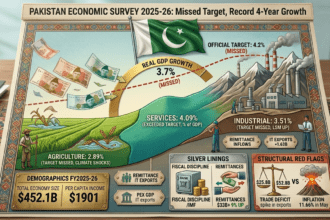
The central bank’s reasoning was not just about the latest inflation print, though that mattered a lot. Pakistan’s headline inflation slowed to 0.3% year-on-year in April 2025, an unusually low reading after the country’s long stretch of painful price pressures. The SBP linked that slowdown to lower food and energy prices, including falling wheat prices, softer global commodity trends and reduced electricity tariffs.
Even so, the MPC did not sound carefree. It said inflation is likely to edge back up and stabilize in the 5% to 7% target range, while warning that risks remain from food prices, energy costs, supply disruptions and uncertainty in global commodity markets. In other words, the bank is easing, but it isn’t pretending the fight is over.
There was also a growth angle here. The central bank noted that Pakistan’s economy was recovering only gradually, with provisional GDP growth for the second quarter of fiscal year 2024-25 at 1.7% year-on-year, while first-quarter growth was revised up to 1.3%. Lower borrowing costs could offer some relief to businesses and households after an extended period of very tight monetary conditions.
The May cut pushed the policy rate to its lowest level since March 2022, according to Business Recorder, and extended a broader easing cycle that had already brought rates down sharply from the crisis-era peak. The IMF, in later reporting on Pakistan’s program, also pointed to falling inflation and steadier domestic and external conditions as factors that had allowed significant monetary easing.
For markets and businesses, the message was pretty clear: the SBP believes disinflation has become convincing enough to support growth, but it still wants to keep one eye firmly on external shocks and domestic price risks. That balance — relief, with caution — is likely to shape the next few policy meetings as Pakistan tries to turn stabilization into something more durable.