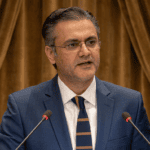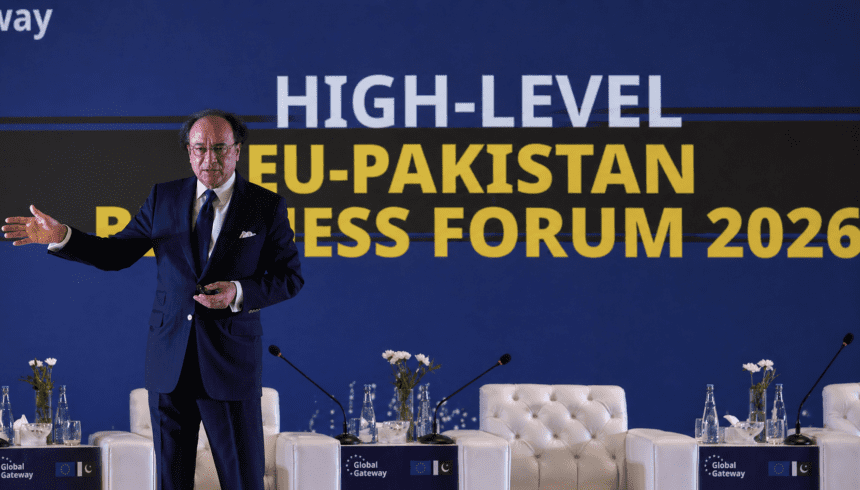
ISLAMABAD, April 28 — Finance Minister Muhammad Aurangzeb said on Tuesday that Pakistan’s economy is likely to expand by around 4% in the current fiscal year, arguing that a run of better macroeconomic indicators points to a steadier recovery after a long stretch of crisis management. He made the remarks while addressing the EU-Pakistan High Level Business Forum in Islamabad.
Aurangzeb said the government had been “consolidating gains” on the economic front and pointed to a current account surplus of a little over $1 billion in March, stronger remittances, rising IT exports and improved performance in value-added segments of the economy. The message was pretty clear: Islamabad wants investors to see Pakistan less as a country firefighting one emergency after another, and more as an economy trying to regain traction.
The finance minister’s 4% projection is also politically important. It suggests the government believes the worst of the external-sector stress has passed, at least for now, and that stabilization measures tied to recent reforms are beginning to filter through into growth. According to official reporting, Aurangzeb has also said Pakistan expects to meet its fiscal and external-sector targets this year, with foreign exchange reserves staying at roughly three months of import cover by the end of June.
Still, the optimism comes with a caution sign hanging over it.
Outside assessments have generally been more restrained than the government’s public pitch. The IMF’s latest support package for Pakistan was approved after the Fund cited progress on stabilization, reserve accumulation and reforms, but it also stressed the need for continued fiscal discipline, exchange-rate flexibility and deeper structural changes, especially in the energy sector. In other words, the recovery narrative is real, but it’s fragile.
That tension — between visible improvement and lingering vulnerability — has followed Pakistan’s economy for months. On one side, inflation has eased sharply from the punishing levels seen earlier, external financing pressures are less acute, and official confidence has returned. On the other, growth remains sensitive to shocks, whether they come from commodity prices, regional instability, climate events or the still-familiar problem of weak tax collection. The IMF’s endorsement of recent progress did not amount to a clean bill of health; it was closer to a vote of conditional confidence.
Aurangzeb’s remarks also fit into a broader government campaign to market Pakistan as a more credible destination for trade and investment. Speaking to a forum built around Pakistan’s commercial ties with Europe, he leaned on the indicators that tend to matter most to foreign investors: reserve levels, external balances, export momentum and remittance flows. That’s not accidental. Islamabad knows perception matters almost as much as the data itself.
Whether the economy actually lands near 4% growth this fiscal year will depend on how durable those gains prove to be in the closing months. For now, the finance minister is trying to draw a line under the emergency phase and sell a simpler story — that Pakistan’s economy, bruised but still standing, is finally moving back toward growth.