
12 MoUs Signed During Iranian President’s Landmark Visit to Islamabad
In a major diplomatic and economic breakthrough, Pakistan and Iran have agreed to expand bilateral trade to $10 billion, signaling a renewed commitment to strengthen cooperation across multiple sectors.
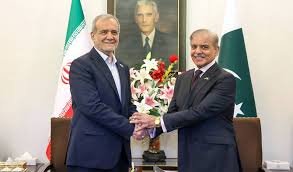
The development came during the two-day official visit of Iranian President Dr Masoud Pezeshkian to Islamabad his first since assuming office where he held wide-ranging talks with Prime Minister Shehbaz Sharif. The high-level engagement culminated in the signing of 12 agreements and Memoranda of Understanding (MoUs), covering trade, energy, connectivity, culture, technology, and more.
Turning Diplomatic Goodwill into Tangible Progress
According to a statement from the Prime Minister’s Office, both sides expressed firm resolve to convert longstanding goodwill into actionable partnerships. “The two countries signed a number of documents to transform them into practical agreements to realise the potential of a $10 billion trade target,” the statement noted.
Currently, bilateral trade stands at approximately $3 billion. Delegations from both countries are expected to meet in the coming weeks to finalise a roadmap for implementation of the new initiatives.
Strong Regional Messaging and Solidarity
In a joint press conference, Prime Minister Sharif condemned the June 13 Israeli strike on Iranian nuclear sites, calling it “unprovoked aggression,” and expressed deep solidarity with the Iranian people. He paid tribute to the Iranian martyrs and lauded Iran’s retaliatory missile strikes as a “display of bravery and wisdom” that exposed Israeli defence weaknesses.
President Pezeshkian, who was accorded a ceremonial welcome and guard of honour at the Prime Minister’s House, thanked Pakistan for its steadfast support during recent regional tensions, including the 12-day Iran-Israel conflict.
He reaffirmed Iran’s commitment to deepening cooperation with Pakistan and hailed the “unshakable bond” between the two neighbours, rooted in shared religious, cultural, and historical ties.
High-Level Engagement and Strategic Agreements
The visit featured one-on-one and delegation-level meetings, with participation from key Pakistani figures including Deputy Prime Minister and Foreign Minister Ishaq Dar, Chief of Army Staff Field Marshal Syed Asim Munir, senior cabinet members, and top officials.
The 12 agreements and MoUs signed include:
Cooperation in plant protection and quarantine
Joint use of the Mirjaveh-Taftan border crossing
Collaboration in science, technology, and innovation
ICT and digital cooperation
Cultural exchange programs for tourism, youth, art, media, and heritage
Maritime safety and firefighting collaboration
Meteorology and climatology cooperation
Mutual judicial assistance in criminal matters
Supplemental MoU on the 2013 air services agreement
Product certification, inspection, and testing recognition
Tourism cooperation roadmap for 2025–2027
A joint ministerial statement on intent to finalize a Free Trade Agreement (FTA)
Barter Trade, Border Markets, and Export Expansion
Among the trade-specific highlights were agreements to facilitate barter trade, enhance export quotas for rice, fruit, and meat, and activate border markets. Both leaders stressed the urgency of removing non-tariff barriers and convening the 22nd session of the Pakistan-Iran Joint Economic Commission.
Shared Stance on Palestine and Kashmir
The leaders also addressed broader regional and global issues. Prime Minister Sharif expressed appreciation for Iran’s unwavering support for the Palestinian cause and reiterated Pakistan’s call for an independent Palestinian state, in line with UN resolutions.
He also thanked Tehran for its continued backing of the people of Indian Illegally Occupied Jammu and Kashmir (IIOJK), highlighting the two nations’ shared advocacy for oppressed communities.
Looking Ahead
The visit marks a strategic shift in Pakistan-Iran relations, with both countries aiming to transition from symbolic gestures to structured economic collaboration. The newly signed agreements, combined with high-level political alignment, are expected to serve as a catalyst for deeper regional integration and mutual prosperity.
Prime Minister Sharif concluded the visit by hosting a luncheon in honour of President Pezeshkian and his delegation, reaffirming Pakistan’s commitment to a robust and enduring partnership with Iran.