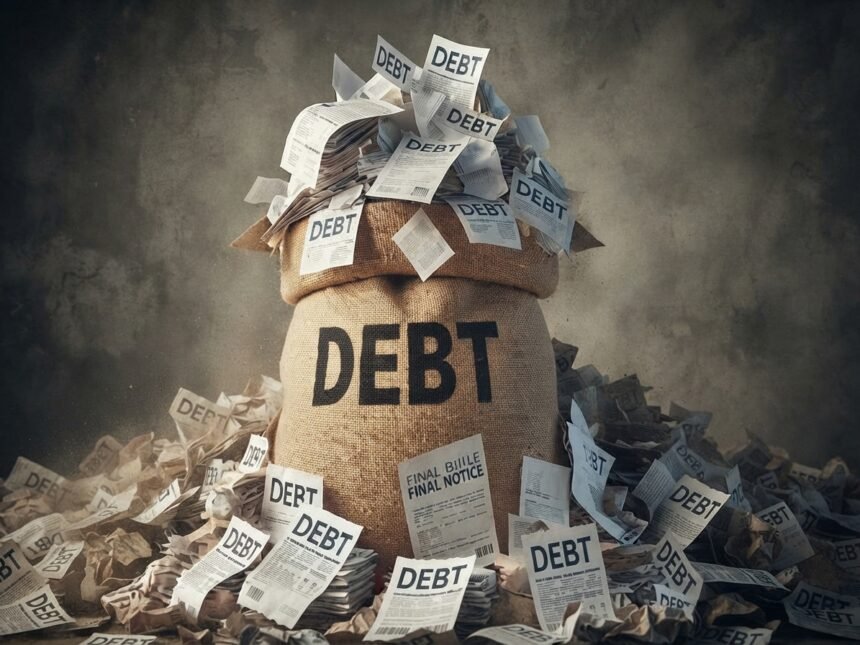
ISLAMABAD: Pakistan’s total debt has crossed Rs100 trillion, a figure that has attracted considerable attention in the media and on social media. While the amount is undoubtedly large, the headline figure alone does not determine whether the country’s debt situation is becoming more dangerous or more manageable.
The more important questions are how quickly debt is increasing, how it compares with the size of the economy, how much of it is denominated in foreign currency, what share of government revenue is being spent on interest payments, how long the debt has to mature, how much needs to be rolled over in the near term and whether Pakistan has sufficient foreign exchange reserves to meet its external obligations.
Viewed through these measures, Pakistan’s current debt position is more nuanced than the Rs100 trillion figure suggests. The direction of change is particularly important.
According to government figures, debt growth during fiscal year 2026 was around 7.7%, reportedly the lowest rate in two decades, compared with an average of about 16% in previous years. This indicates that the pace of debt accumulation has slowed significantly.
Another important measure is the debt-to-GDP ratio. Pakistan’s debt-to-GDP ratio has reportedly fallen to around 68%, compared with the exceptionally high level of about 88% recorded five years ago.
This is a significant improvement. While the absolute value of debt may continue to rise in rupee terms, the burden of debt relative to the size of the economy can decline.
Debt servicing has also improved. Annual interest expenditure has reportedly fallen from around Rs8.9 trillion to Rs6.9 trillion, while interest payments as a share of total government revenue declined from about 61% in fiscal year 2024 to 35% in fiscal year 2026.
In simple terms, where approximately Rs61 out of every Rs100 of government revenue previously went towards interest payments, the share has now fallen to around Rs35.
Pakistan’s debt position also needs to be assessed alongside its foreign exchange reserves. State Bank reserves have increased from around $3 billion three and a half years ago to $18.5 billion, raising import cover from barely 2.4 weeks to around three months.
Although this remains below a comfortable level, the rebuilding of reserves has significantly strengthened Pakistan’s ability to meet external financial obligations.
The composition and maturity of debt are just as important as its overall size. Pakistan has reportedly retired around Rs4.72 trillion of debt before maturity. At the same time, the average maturity of domestic debt has increased from roughly 2.8 years to more than 3.8 years.
Longer maturities reduce the risk of having to refinance very large amounts of debt every year.
External debt has historically represented one of Pakistan’s biggest vulnerabilities because it has to be serviced in foreign currency. However, there has also been some improvement in this area, with the share of external debt in total public debt falling from around 38% six years ago to 31%.
Risks remain, however, as roughly one-quarter of the external debt comes from bilateral creditors and may require frequent refinancing or rollover arrangements.
Another important indicator is international market confidence. Pakistan has returned to international capital markets after a four-year gap, including through Eurobond and Panda Bond issuances.
Credit rating agencies have also upgraded Pakistan. S&P Global Ratings recently raised the country’s rating to B, its highest level in almost a decade.
Pakistan, however, remains below investment-grade status and will need further progress to secure better financing conditions and broader access to international capital markets.
The key challenge now is ensuring that these improvements are not temporary. Pakistan needs to reach a point where debt no longer crowds out development spending, interest payments do not consume resources needed for education and infrastructure, and economic growth itself gradually reduces the burden of past borrowing.
The Rs100 trillion figure makes for a dramatic headline, but the real measure of Pakistan’s debt problem is not the size of the debt alone. It is the country’s ability to carry and service that debt on a sustainable basis.
For the first time in many years, there are signs that the direction may be improving.