ISLAMABAD: For years, Pakistan’s economic cycle followed a familiar pattern: foreign exchange reserves declined, the rupee came under pressure, inflation accelerated, imports were restricted and the government turned to the International Monetary Fund (IMF) for support. Stabilisation measures would eventually restore some balance, only for the cycle to return.
But Pakistan enters the second half of 2026 in a different position. The economy has stabilised, the fiscal position has improved, inflation is more contained than during the recent crisis, foreign exchange reserves have been rebuilt and the IMF has acknowledged strong implementation of the current reform programme.
These are significant achievements. Yet they raise a more difficult question: what comes after economic stabilisation?
Pakistan has become better at avoiding economic collapse, but it has still not demonstrated that it can sustain investment-driven, export-oriented growth capable of delivering widespread prosperity. That could become the defining economic challenge of the next decade.
Recent data point to a significant improvement in Pakistan’s external position. During July-March of fiscal year 2026, the country recorded a current account surplus of $72 million, while remittances reached $41.6 billion during the fiscal year.
Foreign exchange reserves held by the State Bank of Pakistan stood at $17.1 billion by May 15, while total reserves, including those held by commercial banks, reached $22.6 billion. The IMF has also reported stronger economic growth, contained inflation and reserve accumulation exceeding earlier expectations.
These developments indicate that the stabilisation programme has achieved many of its immediate objectives. The challenge now is to convert that stability into stronger and more sustainable economic growth.
Pakistan does not merely need positive growth. It needs growth at a sufficiently high and sustained rate to improve living standards and create jobs for its rapidly expanding working-age population. Millions of young people enter the labour force each year, while the government needs greater revenues to finance education, healthcare, infrastructure and social protection.
Growth of around 3% to 4% may keep the economy moving, but it is unlikely to transform living standards quickly enough. More importantly, Pakistan has historically faced a recurring problem: when growth accelerates, imports often rise sharply as well.
The result is a familiar sequence of faster growth, a wider external deficit, pressure on the rupee, falling reserves and eventually another stabilisation programme.
The central challenge, therefore, is not simply to achieve faster growth but to create a different kind of growth — one that generates sufficient exports, investment and productivity to finance itself.
Exports remain one of the weakest points of Pakistan’s economic model. According to the Pakistan Economic Survey, goods exports during July-March fiscal year 2026 stood at $22.7 billion, while imports reached $50.7 billion.
The figures highlight a structural problem. Pakistan continues to consume and invest at a level that requires considerably more foreign exchange than its goods exports generate. Remittances help bridge part of the gap, while external financing covers another portion, but neither can replace a competitive export economy.
The key question is therefore not simply why Pakistan imports so much, but why it has not managed to increase exports dramatically.
Restricting imports can temporarily improve the balance of payments, but excessive import controls can also suppress investment, consumption and economic activity. Export growth is different because it allows the economy to expand while generating the foreign exchange needed to finance that expansion.
Pakistan’s long-term strategy therefore needs to shift from managing shortages to building competitiveness.
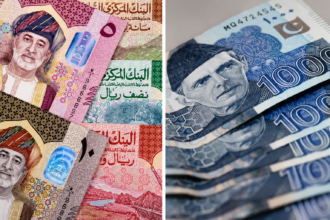
Another important feature of the economy is the growing contribution of overseas Pakistanis. Remittances of $41.6 billion in fiscal year 2026 have become a major source of foreign exchange.
However, this also highlights a broader challenge. A prosperous economy should increasingly export products, services, technology and capital rather than relying heavily on exporting its workforce.
Pakistan must therefore ask why talented young people need to leave the country to earn globally competitive incomes.
This points towards potential growth areas such as information technology, professional services, engineering, digital commerce and other internationally tradable services. To develop these sectors, Pakistan will need better infrastructure, education, regulation, financial systems and a business environment that enables skilled workers to earn globally while remaining economically connected to the country.
Energy is another critical part of the equation. For businesses, unreliable or expensive electricity and gas directly affect productivity and international competitiveness.
Pakistan needs an energy system that is financially sustainable, reliable and affordable for productive businesses. Achieving this will require difficult decisions on tariffs, subsidies, distribution losses and the performance of state-owned entities.
Economic transformation is rarely achieved through one major policy. It usually comes from resolving many smaller problems that make it easier for businesses to invest, produce and export.
Tax reforms should broaden the tax base rather than repeatedly increasing the burden on already documented taxpayers. Energy reforms should reduce production costs while improving reliability. Reform of state-owned enterprises should lower the burden on taxpayers and improve public services.
Education spending should focus on producing workers capable of competing in higher-value industries, while regulatory reforms should make it easier for businesses to establish, expand and operate. Trade policy should encourage international competitiveness rather than permanently shielding domestic firms from competition.
Pakistan has already demonstrated that it can survive economic crises. It has shown that difficult fiscal and monetary adjustments can restore stability, rebuild reserves and improve external confidence.
The next test, however, will be much harder.
The country must determine whether businesses are willing to invest because they expect to become more competitive, whether exporters can enter new markets, whether young Pakistanis can find productive employment at home and whether Pakistan can increasingly export technology and services instead of labour.
Most importantly, Pakistan must find a way to achieve faster growth without immediately triggering another foreign exchange crisis.
The country has spent years learning how to avoid economic collapse. The next decade must be about learning how to achieve sustained and inclusive growth.