By using this site, you agree to the Privacy Policy and Terms of Use.
Accept
Media HydeMedia Hyde
  • Home
  • Politics
  • Education
  • Entertainment
  • Sports
  • Blogs
  • Business & Commerce
  • Others
    • Religious
    • Metropolitan
    • Climate and Weather
Font ResizerAa
Media HydeMedia Hyde
Font ResizerAa
  • Home
  • Politics
  • Education
  • Entertainment
  • Sports
  • Blogs
  • Business & Commerce
  • Others
    • Religious
    • Metropolitan
    • Climate and Weather
Follow US
© 2026 Media Hyde Network. All Rights Reserved.
Business & Commerce

PM tells FBR to ramp up enforcement as Pakistan pushes for higher tax revenues

Last updated: May 6, 2026 12:03 am
Yamna Shahid
Share
PM tells FBR to ramp up enforcement as Pakistan pushes for higher tax revenues
SHARE

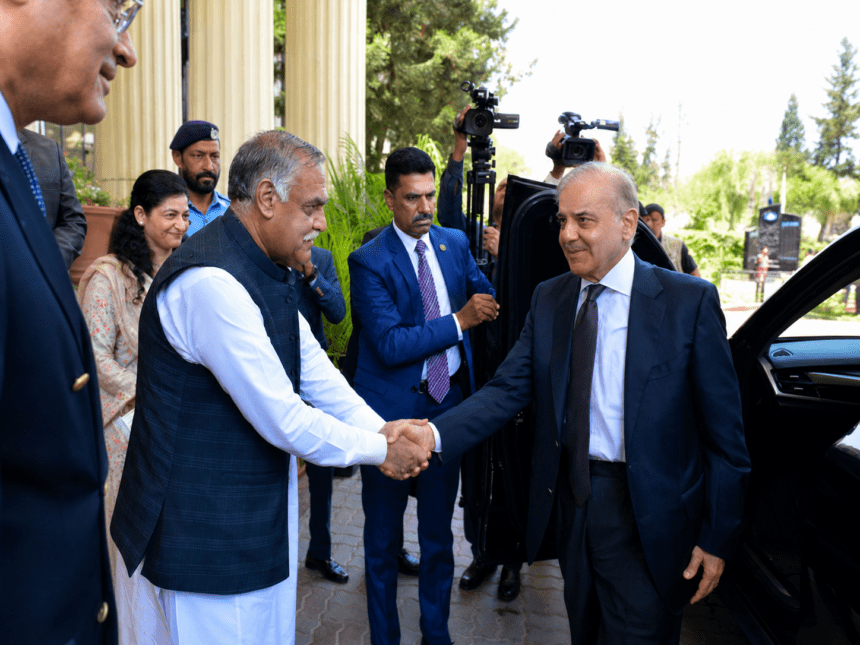
Prime Minister Shehbaz Sharif has directed the Federal Board of Revenue to tighten enforcement and expand automated monitoring of key sectors, signaling a sharper push to raise tax collection and curb evasion as Pakistan struggles to stay on track with its fiscal targets. The directive came during a weekly review meeting on FBR affairs in Islamabad on March 10, where the prime minister also asked officials to bring most productive sectors into an automated monitoring regime.

The government’s message was fairly clear: enforcement is no longer being treated as a side tool. It is becoming central to the revenue strategy. According to official reporting, Sharif told the tax machinery to strengthen enforcement measures to increase revenues, while also pushing related digitisation efforts, including wider use of technology and faster implementation of traceability-style systems in sectors vulnerable to leakage.

That matters because the pressure on the FBR hasn’t gone away. Recent revenue data shows the tax authority still facing sizeable gaps against target. Reporting in early May said the FBR had collected about Rs9.3 trillion from July to April, leaving it around Rs833 billion short of target for that period. Another report on March collections put the July-March shortfall at roughly Rs610 billion, underlining how difficult the revenue path remains even with year-on-year growth intact.

The enforcement-first approach is not entirely new, but officials have been leaning into it more openly. In earlier comments, FBR Chairman Rashid Mahmood Langrial said enforcement would play a major role in plugging leakages, settling tax disputes and expanding the tax net, especially in retail and wholesale. He also said the government had already raised Rs390 billion through enforcement measures and projected a broadly similar contribution in the following fiscal year.

That is the key point of caution around the headline. I could verify the broader policy direction and the emphasis on stronger enforcement, but I did not find a reliable source confirming the exact phrase that the prime minister ordered the FBR to double revenue generation from enforcement measures next year. What the reporting does support is a firm instruction to strengthen enforcement and a prior projection from FBR leadership of an “almost similar” enforcement contribution in the next fiscal year, not explicitly a doubling.

Still, the political and fiscal logic behind the move is easy to see. Pakistan’s government has been trying to show that revenue can be lifted not just by new taxes, but by tougher compliance, digital oversight and better tracking of under-taxed sectors. Business Recorder reported that the prime minister specifically called for tighter tax collection through modern, automated monitoring of the country’s most productive sectors, part of a broader attempt to curb evasion and lift state revenues without relying only on rate increases.

There is also a governance angle here. Official coverage of the meeting noted the prime minister’s praise for efforts to strengthen Pakistan Revenue Automation Limited, or PRAL, and recruit experts on merit. He also directed the Drug Regulatory Authority to complete medicine serialization quickly, which fits the administration’s wider emphasis on data trails and digital verification across economic activity.

Whether this delivers the kind of jump Islamabad wants is another question. Enforcement can bring in quick gains, especially where evasion is concentrated and documentation is weak. But it usually works best when paired with durable administrative reform, cleaner litigation processes and a broader tax base. For now, the government appears to be betting that tougher enforcement, backed by automation, can help close the gap faster than conventional measures alone.

Share This Article
Email Copy Link Print
Previous Article FBR shuts down unit tracing undisclosed foreign assets after UAE refuses to share data FBR shuts down unit tracing undisclosed foreign assets after UAE refuses to share data
Next Article Sabalenka says players could boycott French Open as prize-money row intensifies Sabalenka says players could boycott French Open as prize-money row intensifies
Leave a Comment

Leave a Reply Cancel reply

Your email address will not be published. Required fields are marked *

Sponsored Ads

Stay Connected

FacebookLike
XFollow
InstagramFollow
YoutubeSubscribe
WhatsAppFollow
ThreadsFollow
Canada Pivots to Europe as U.S. Tariff Threat Looms
Economy Headline
July 30, 2026
Trump’s Cuba Strategy: Plan to Redirect Deportees to Uruguay Sparks Regional Alarm
Headline Politics
July 30, 2026
The Summer That Broke Europe
Climate and Weather Headline
July 30, 2026
Stop Posting Your Kids: NCA Issues Urgent Warning on Child Safety
Cyber Security Headline
July 30, 2026
Trump Administration Targets Federal Land for Massive Data Center Expansion
Climate and Weather Headline
July 30, 2026
Islamabad’s Tightrope: Managing Protests and Economic Pressure in Kashmir
Headline Politics
July 30, 2026

You Might Also Like

Pakistan Customs Clarifies Mobile Import Data; Local Assembly Kits Consume 80% of Rs 520 Billion Bill
Business & Commerce

Pakistan Customs Clarifies Mobile Import Data; Local Assembly Kits Consume 80% of Rs 520 Billion Bill

By
Yamna Shahid
Cement Prices Remain Stable Amid Weak Demand and Easing Fuel Costs
Business & Commerce

Cement Prices Remain Stable Amid Weak Demand and Easing Fuel Costs

By
Yamna Shahid
Nvidia Unveils Next-Gen AI Chip ‘RTX Spark’ to Reinvent Personal Computing; Huang Boldly Rejects AI Job Loss Fears as ‘Complete Nonsense’
Business & Commerce

Nvidia Unveils Next-Gen AI Chip ‘RTX Spark’ to Reinvent Personal Computing; Huang Boldly Rejects AI Job Loss Fears as ‘Complete Nonsense’

By
Yamna Shahid
Pakistan to Launch Rs 1 Billion Camel Milk Powder Project Alongside Major Agriculture and Seed Production Schemes
Business & Commerce

Pakistan to Launch Rs 1 Billion Camel Milk Powder Project Alongside Major Agriculture and Seed Production Schemes

By
Yamna Shahid
Media Hyde Media Hyde Dark
Facebook Twitter Youtube Rss Medium

About US

Media Hyde Network: Your instant connection to breaking stories and live updates. Stay informed with our real-time coverage across politics, tech, entertainment, and more. Your reliable source for 24/7 News.

Top Categories
  • Headline
  • Politics
  • Entertainment
  • Education
  • Sports
  • Religious
  • Metropolitan
  • Climate and Weather
Usefull Links
  • Contact Us
  • Disclaimer
  • Privacy Policy
  • Cookies Policy
  • Advertising Policy
  • Terms & Conditions

© 2025 Media Hyde Network. All Rights Reserved.

Welcome Back!

Sign in to your account

Username or Email Address
Password

Lost your password?