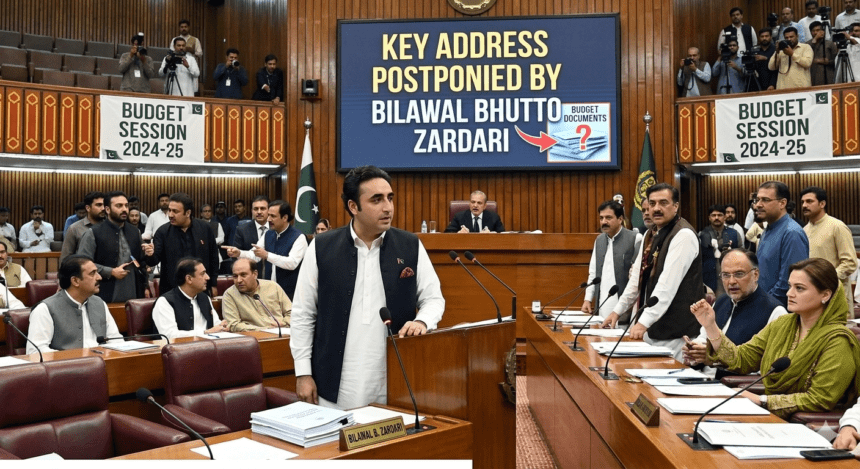
The Pakistan Peoples Party is signaling a hardening stance against the federal government’s fiscal roadmap. Tensions between the coalition partners reached a new peak Wednesday, marked by the abrupt postponement of Chairman Bilawal Bhutto-Zardari’s scheduled speech in the National Assembly.
The address, intended to serve as a high-stakes critique of the federal budget, was pulled from the agenda at the eleventh hour. Party insiders suggest the move is a tactical pause—a deliberate attempt to exert pressure behind closed doors rather than airing grievances on the floor of the House.
For the PML-N-led government, this is a headache they can’t afford. The budget requires a simple majority to pass, and while the numbers technically favor the ruling coalition, a public fracture with the PPP would leave the administration politically isolated.
“We have serious reservations,” said a senior PPP lawmaker, requesting anonymity to speak freely on internal strategy. “The budget ignores the promises made to our voters. We aren’t here to be a rubber stamp for policies that deepen the cost-of-living crisis.”
The friction centers on the allocation of development funds and the tax burden placed on the agricultural sector—a core constituency for the PPP. Despite multiple rounds of talks between Finance Minister Muhammad Aurangzeb and PPP leadership, the two sides remain stuck on the specifics of the Public Sector Development Program (PSDP).
For the government, the math is unforgiving. With the IMF watching closely, the finance team has little room to maneuver or offer the kind of concessions the PPP is demanding. Every rupee shifted to a provincial project is a rupee stripped from the federal deficit-reduction plan.
Bilawal’s decision to stay silent for now suggests the party is still weighing the cost of a full-blown confrontation. They want more leverage, but they aren’t ready to pull the plug on the government.
The silence won’t last. The budget debate is moving toward a final vote, and the PPP’s strategy—whether it involves a vote against the government or a negotiated compromise—will define the stability of the current parliamentary term. For now, the government is left waiting to see what price the PPP will demand for its support.