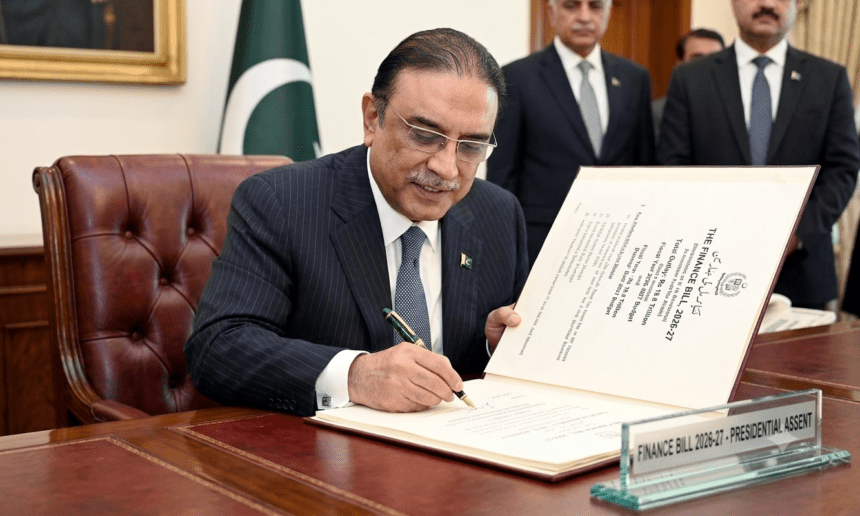
ISLAMABAD: President Asif Ali Zardari has formally given assent to the Finance Bill 2026, paving the way for the implementation of Pakistan’s Rs18.8 trillion federal budget for the fiscal year 2026-27.
The presidential approval marks the completion of the constitutional process required for the Finance Bill to become law after its passage by Parliament. The new budget outlines the government’s fiscal priorities, including revenue generation, development spending, social welfare initiatives, and measures to maintain macroeconomic stability.
The Finance Bill introduces several taxation measures, revisions to customs and income tax laws, and policy changes designed to broaden the tax base, improve revenue collection, and support economic reforms. It also allocates substantial funds for infrastructure development, education, healthcare, defense, and public sector projects.
Government officials stated that the budget seeks to balance economic growth with fiscal discipline while ensuring continued support for vulnerable segments of society. The administration expects the new fiscal framework to strengthen investor confidence, attract foreign investment, and accelerate economic recovery.
Economic analysts believe the implementation of the Finance Act will play a crucial role in determining Pakistan’s fiscal performance during FY2026-27. However, they noted that effective execution of revenue measures and expenditure controls will be essential to achieving the government’s budgetary targets.
With the President’s assent, the Finance Act 2026 comes into effect from the beginning of the new fiscal year, allowing the government to implement its taxation policies and budgetary allocations.