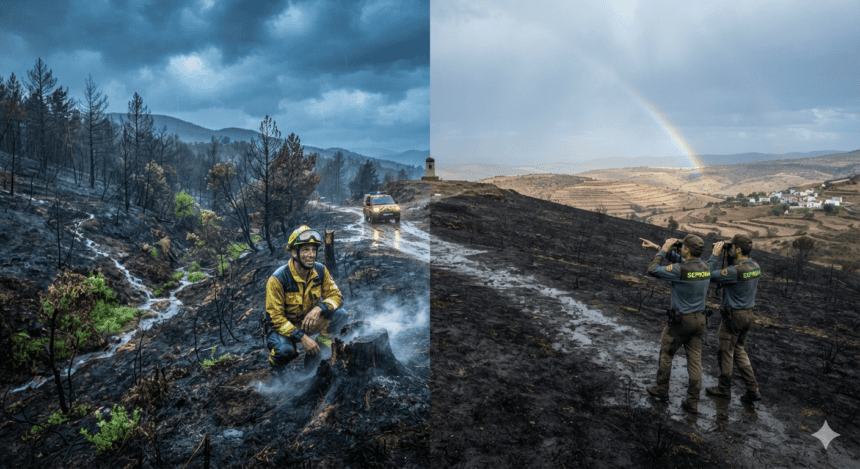
Firefighters across France and Spain gained the upper hand this week as heavy rainfall and dropping temperatures finally broke the back of relentless summer wildfires.
The change in weather marks a turning point for regions that spent the last fortnight battling out-of-control blazes. In Spain, where fire crews have been working around the clock, officials reported “almost no flames” remaining in the most critical zones.
The relief is tangible for residents in the southwestern Gironde region of France. Thousands who fled their homes as smoke choked the sky are now returning to assess the damage. While the immediate threat has subsided, the scorched landscape serves as a stark reminder of the season’s volatility.
“The rain was our best ally,” a regional fire commander said. “It allowed our crews to secure perimeters that were previously impossible to hold.”
Despite the progress, the risk isn’t over. Authorities remain on high alert, cautious that a sudden return of dry winds could reignite smoldering embers buried deep within the forest floor. Soil moisture remains dangerously low in many areas, meaning the ground is still essentially a tinderbox waiting for the next spark.
This year’s fire season has been particularly brutal, stretching emergency services to their limits. The combination of early heatwaves and prolonged drought created perfect conditions for rapid fire spread, leading to the destruction of thousands of hectares of forest and forcing the evacuation of entire villages.
For now, the focus shifts from active suppression to containment. Firefighting units are rotating out of the front lines, replaced by teams tasked with monitoring hot spots that could flare up if the heat returns.
As the smoke clears, the conversation in Paris and Madrid is already turning toward the future. With climate patterns shifting, officials are under pressure to rethink forest management and firefighting strategies before the next summer season arrives.