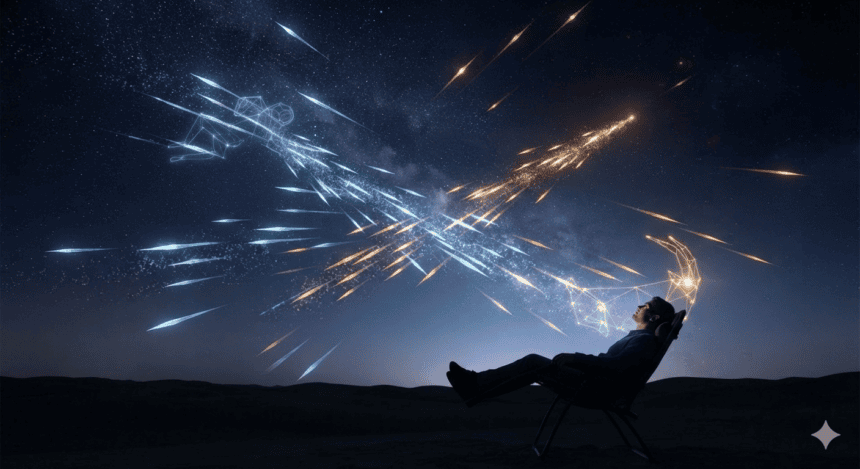
The night sky delivers a rare celestial coincidence tonight as two distinct meteor showers reach their peak simultaneously. The Delta Aquariids and the Alpha Capricornids are both hitting maximum activity, offering a chance to spot fireballs and faint streaks without needing a telescope.
The Delta Aquariids originate from the debris of comets Marsden and Kracht. They typically produce about 15 to 20 meteors per hour under ideal conditions. While they are often described as average in intensity, they are known for leaving persistent, glowing trails behind them as they burn up in the atmosphere.
The Alpha Capricornids bring a different show. They are famous for producing bright, slow-moving fireballs. Though the hourly rate is lower than the Delta Aquariids, the brilliance of these meteors often compensates for the lack of quantity.
The moon is currently in a waning crescent phase, meaning it won’t wash out the faint light of the meteors. This provides a dark canvas for observers, provided they find a spot away from urban light pollution.
To catch the best view, head to an open area at least an hour after local sunset. Your eyes need about 20 minutes to adjust to the darkness. Avoid checking your phone; the blue light ruins night vision instantly.
You don’t need to look at any specific constellation. While the Delta Aquariids appear to radiate from the constellation Aquarius and the Alpha Capricornids from Capricornus, meteors can—and will—appear anywhere in the sky. Lie back on a reclining chair or a blanket, keep your gaze wide, and give the sky your full attention.
The peak intensity will likely hold through the early hours of the morning. If you miss the window tonight, don’t worry; both showers remain active through mid-August, though the hourly rates will taper off significantly after tonight’s overlap.
The best advice from astronomers remains simple: patience. Meteor watching is a game of waiting, not searching. Find a dark patch of sky, stay still, and let the meteors come to you.